 Sunrise

1. The Industrial Evolution: Global Liquid Color Market Landscape
In the modern era of automated industrial processing, the global chemical and materials finishing sector is witnessing a decisive structural migration from traditional powder dyes to advanced, highly stable liquid color solutions. The reasons behind this shift are rooted in occupational health, environmental stewardship (ESG), and manufacturing precision. Raw dye powders carry inherent occupational risks, primarily involving airborne particulate inhalation and dust-explosion hazards. On the contrary, liquid color formulations present a dust-free, fully pumpable coloring format that easily integrates into closed-loop, automated batching systems.
Liquid colors are typically engineered as high-concentration solutions or sub-micron pigment dispersions stabilized by surfactant chemistry. By avoiding the dry processing stages, manufacturers reduce cleaning downtime, enhance dosage accuracy down to fractions of a gram, and improve batch-to-batch consistency. Today, regions with stringent environmental legislation, including North America (under EPA guidance) and the European Union (governed by REACH regulations), exhibit the highest adoption rates of liquid coloring technologies. Leading global enterprises across automotive coatings, industrial plastics, commercial packaging, and textile sectors have designated liquid formats as their standard sourcing profile.
Strategic Advantages of Liquid Formulations over Solid Forms
- Elimination of Workplace Dust: Mitigates particulate exposure, improving air quality within compounding and blending facilities.
- Automated In-Line Dosing: High compatibility with volumetric and gravimetric dosing pump architectures, enabling dynamic control.
- Optimized Coloristic Strength: Liquid colorants exhibit pre-dispersed particles, preventing the agglomeration typically seen when dissolving dry solids in production environments.
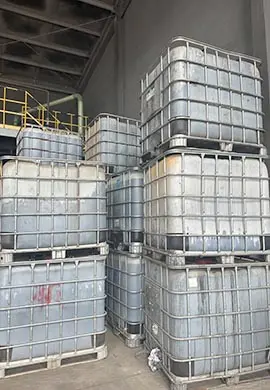
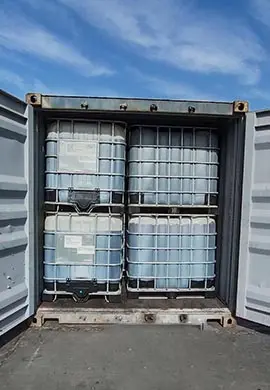
- Reduced Waste & Storage Footprint: Delivered in recyclable IBC containers or custom drums, ensuring close to 100% material extraction.
2. Supply Chain Optimization: The Chinese Factory Efficiency Edge
Chinese chemical manufacturing clusters have achieved global leadership in colorant production through horizontal integration and advanced scaling economics. The geographical concentration of basic petrochemical feeds, raw color intermediates, and finished product synthesis in industrial parks allows for unmatched logistics speed and raw material pricing stability. A primary example is the industrial cluster surrounding Tianjin Sunrise Chem Group.
Beyond simple cost advantages, modern Chinese colorant factories are defined by state-of-the-art automation. Distributed Control Systems (DCS) continuously monitor parameters such as diazotization temperatures, pH adjustment rates, and high-shear dispersion processes. In liquid dye production, maintaining absolute viscosity stability and preventing phase separation is crucial. By deploying high-precision filtration and computerized bead milling technology, Chinese plants achieve narrow particle-size distributions in liquid colorants, avoiding settling or clogging during shipping and storage. Furthermore, proximity to major deepwater ports ensures that containerized shipments are dispatched with optimal shipping timelines, mitigating risks in the global logistics network.
DCS Automation
Continuous monitoring of synthesis conditions prevents standard deviation in coloristic yield, guaranteeing batch consistency.
Supply Integration
Direct sourcing of essential chemical intermediates insulates international buyers from volatile raw material market spikes.
Port Proximity Logistics
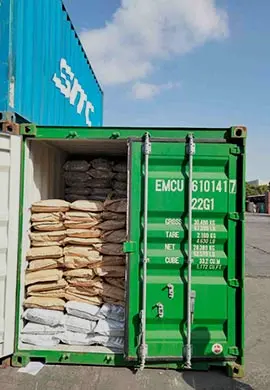
Direct routes from industrialized chemical zones to major deep-water ports reduce international delivery timelines.