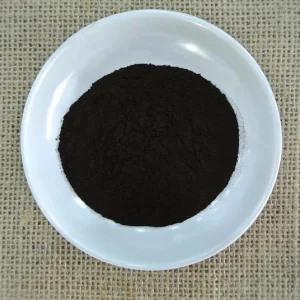
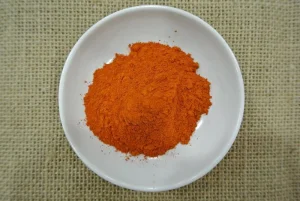
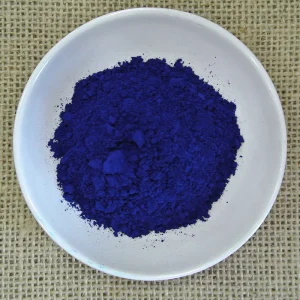
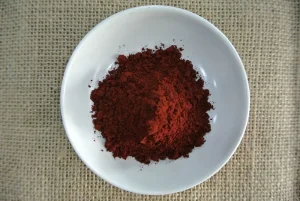
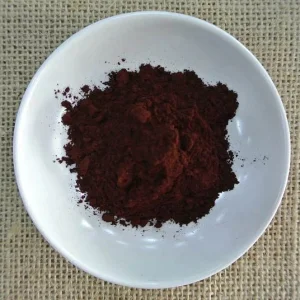
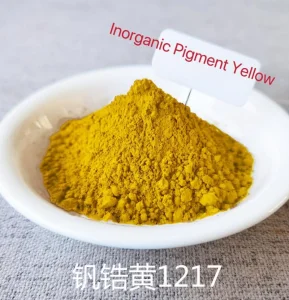
Discover our primary selection of industrial dyes, organic solvents, and physical pigment bases engineered to meet the highest molecular stability and dispersibility guidelines.
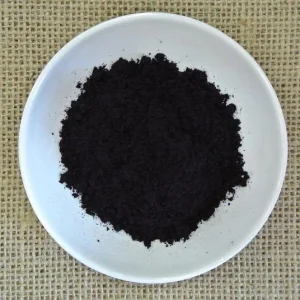
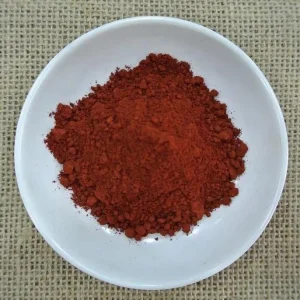
Sourcing chemical colorants in the modern industrial landscape requires navigating intricate supply chains, highly precise quality tolerances, and evolving geopolitical frameworks.
The global market for chemical pigments and dyestuffs is expanding at a significant Compound Annual Growth Rate (CAGR). This expansion is driven by robust demand from sectors such as textiles, plastics, papermaking, architectural coatings, and printing inks. Historically, the trade focused primarily on raw pricing. However, modern procurement models evaluate suppliers based on a more comprehensive set of criteria: chemical stability, batch-to-batch consistency, toxicological safety, and regulatory compliance.
An industry-grade "Pigment Base" refers to the core chemical formulation or dry press cake that undergoes dispersibility modification, milling, and vehicle integration to produce functional paints, masterbatches, and finish dyestuffs. In the international chemical trade, establishing an authoritative connection with a certified manufacturer like Tianjin Sunrise Chem Group is essential to mitigating risks associated with material inconsistency, shipping delays, and regulatory penalties.
Understanding the physical-chemical attributes of your pigment supply is key to optimizing production. Factors like particle size distribution (PSD), specific surface area, oil absorption value, and crystalline polymorphism directly affect the performance of the final colorant. Aligning with a supplier that provides clear testing protocols helps ensure optimal pigment dispersion and performance.
Tianjin Sunrise Chem Group develops and manufactures a wide range of dyestuffs and chemical pigments, each tailored to specific physical-chemical substrates.
Anionic compounds designed to form hydrogen bonds directly with cellulosic fibers. Ideal for cotton and papermaking processes without the absolute need for complex mordants, balancing costs and performance.
Acid dyes utilize water-soluble anionic structures suited for wool, silk, and polyamides. Basic (cationic) dyes feature intense chromophore profiles that bind to acrylics and tannic-acid treated fibers.
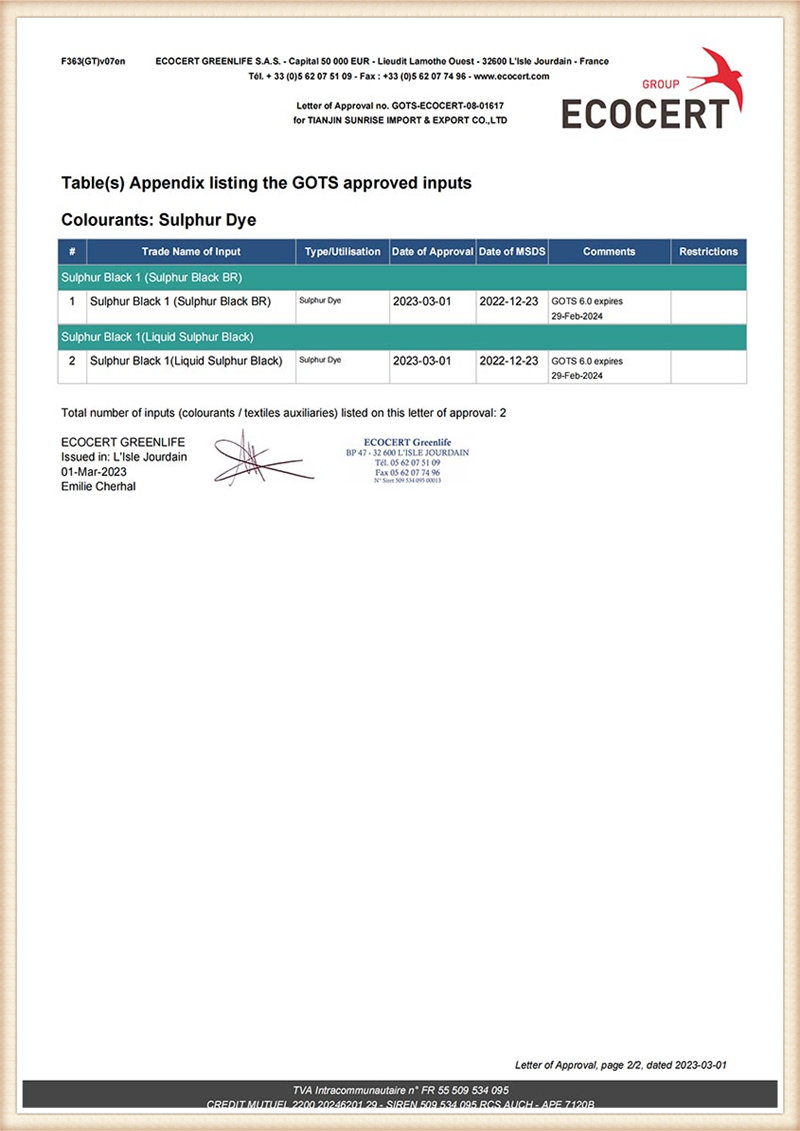
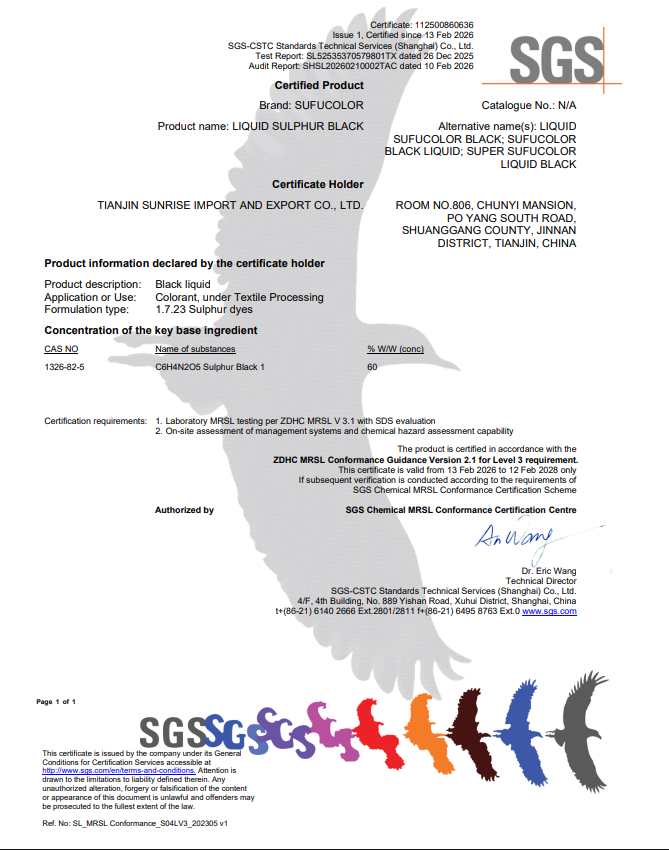
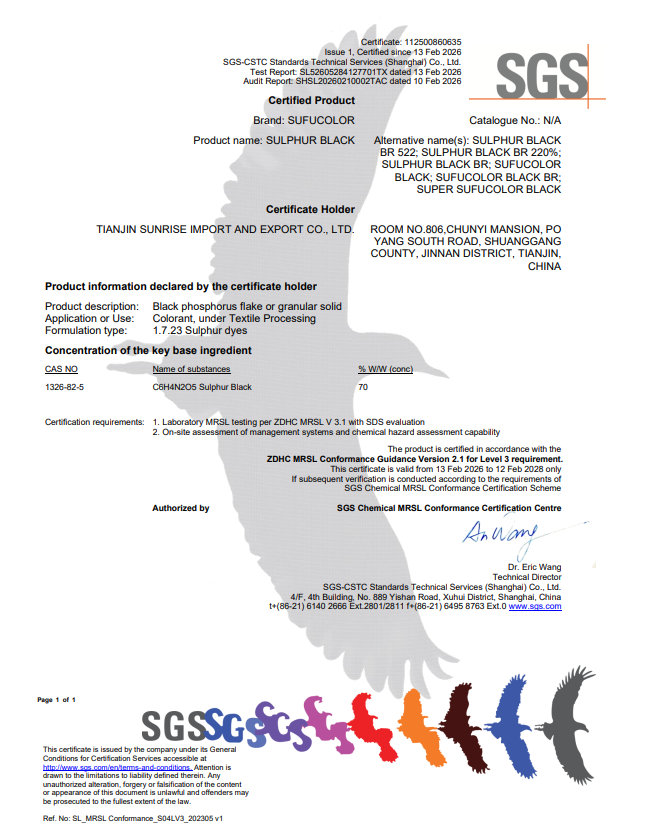
Sulphur dyes provide excellent washfastness for denim and workwear coloration. Non-polar solvent dyes exhibit compatibility with polymers and hydrocarbon-based systems.
How integration, infrastructure, and proximity to major shipping terminals optimize value chains for global buyers.
Chinese production hubs benefit from integrated chemical supply parks. This proximity to precursor reagents minimizes transport costs and reduces raw material supply risks.
Modern manufacturing facilities utilize Distributed Control Systems (DCS). This level of process control stabilizes batch parameters, minimizing variance in color value and absorption characteristics.
Proximity to Tianjin Port (Xingang) supports efficient global shipping. This geographic position helps streamline supply lines and support reliable delivery schedules.
Different manufacturing processes require specific pigment properties. Selecting the proper base is key to downstream efficiency.
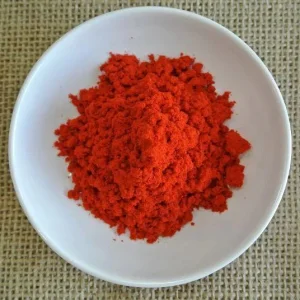
In textile and leather coloration, colorfastness to light, washing, and rubbing is essential. Dynamic processes like pad dyeing or exhaustion require colorants with high affinity profiles. For example, our Acid Red 73 and Acid Orange 7 are designed to yield high exhaust rates on wool, silk, and leather substrates, maintaining deep shade consistency while minimizing chemical runoff.
Plastics processing involves high thermal stress. Solvent dyes such as Solvent Orange 60 and Solvent Blue 36 offer the thermal stability needed for injection molding and extrusion, dispersing cleanly within the polymer melt without decomposing or agglomerating.
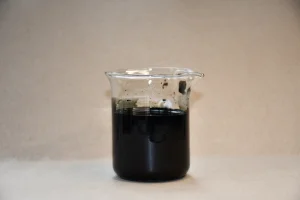
Dyeing paper pulp requires colorants that exhibit high retention rates on cellulose fibers. Our direct dyes, including Direct Yellow 12 and liquid versions of black and blue colorants, bond cleanly with wood pulp, minimizing wastewater loading and supporting runability on paper machines.
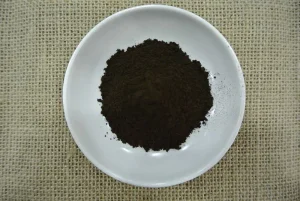
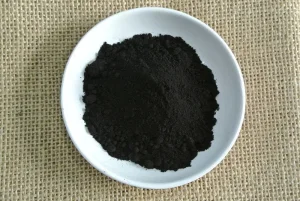
For outdoor building materials, resistance to alkaline cement environments and UV radiation is critical. Inorganic options like Iron Oxide Black 27 provide long-term color stability in concrete masonry, retaining shade depth through weathering cycles.
Meeting modern environmental regulations is essential for entry into regulated consumer markets.
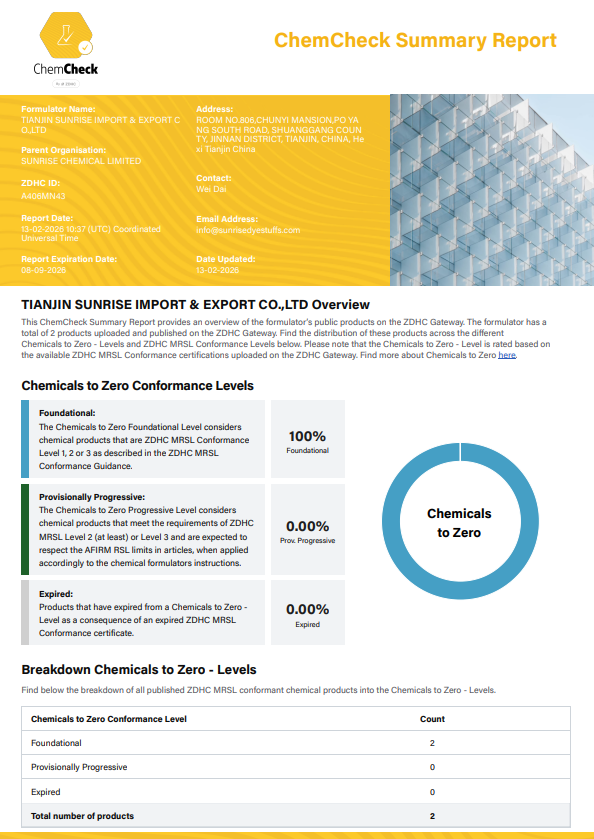
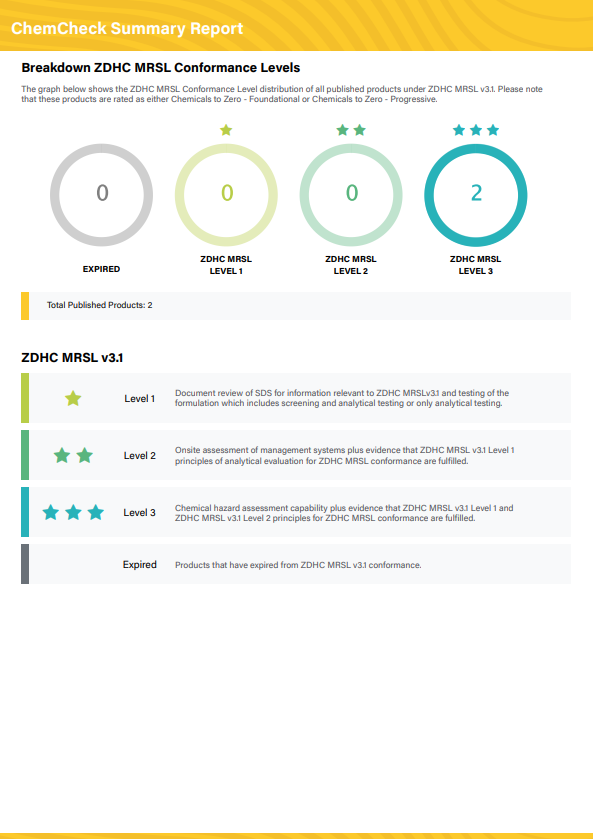
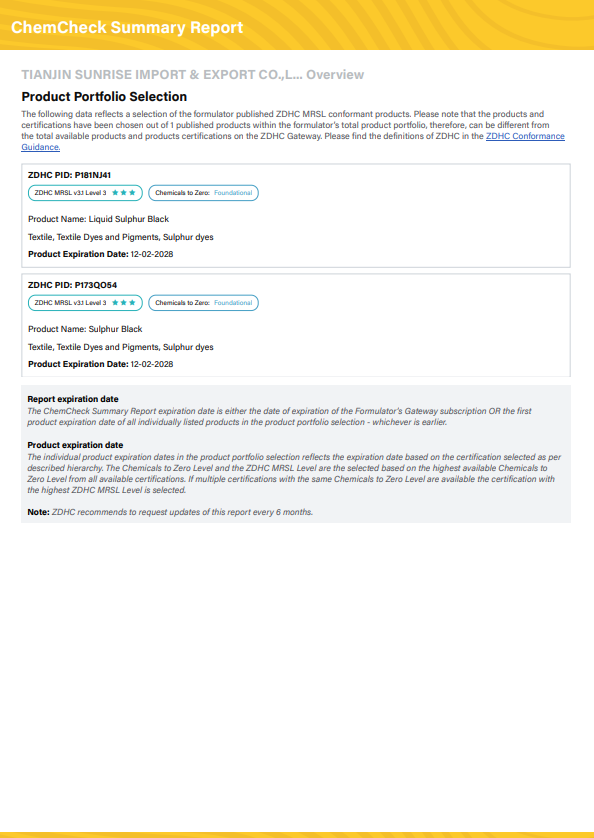
The Zero Discharge of Hazardous Chemicals (ZDHC) program works to eliminate restricted substances from supply chains. Achieving ZDHC Level 3 indicates that chemical formulations are systematically reviewed and tested. Sourcing Level 3 products helps downstream users prevent restricted substances from entering their production systems.
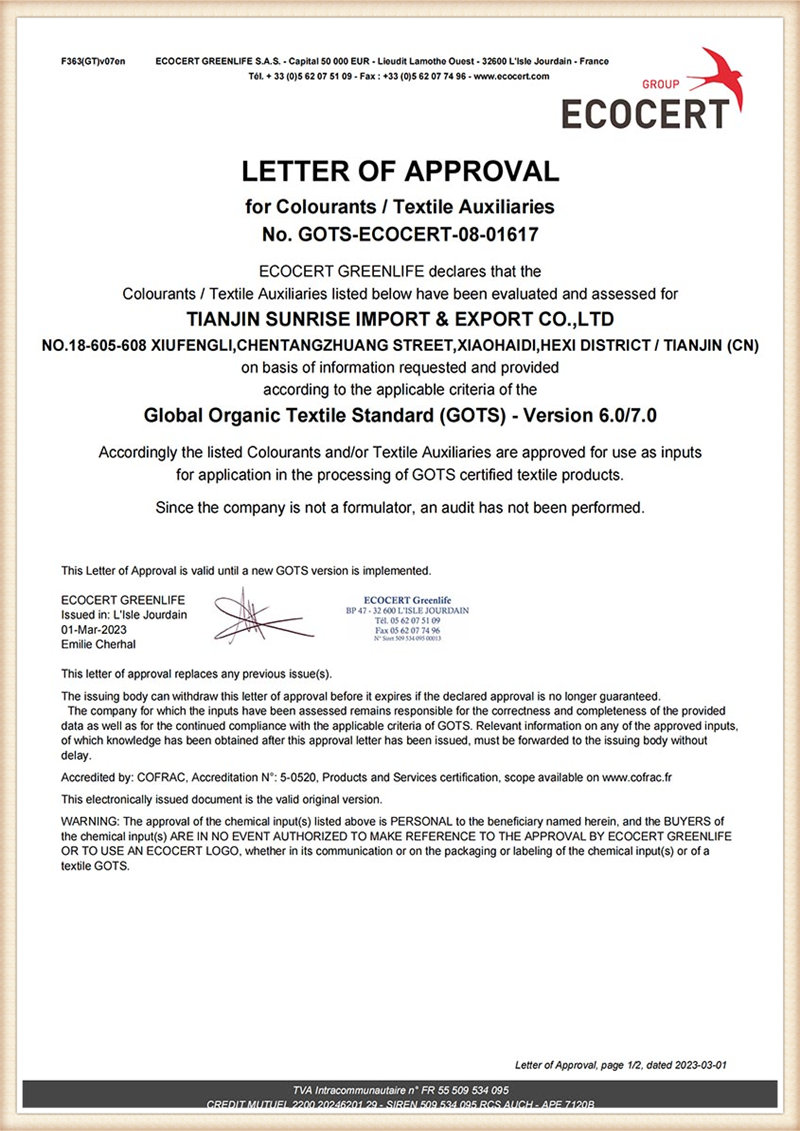
The Global Organic Textile Standard (GOTS) defines requirements along the entire textile supply chain for organic fibers. Using GOTS-certified dyes ensures that colorants meet strict environmental and toxicological criteria, supporting compliance for end-products destined for retail markets.
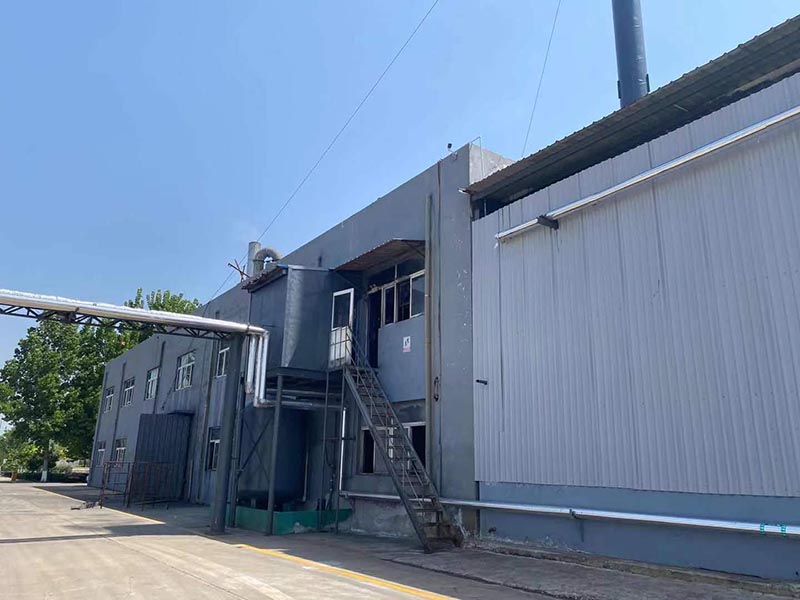
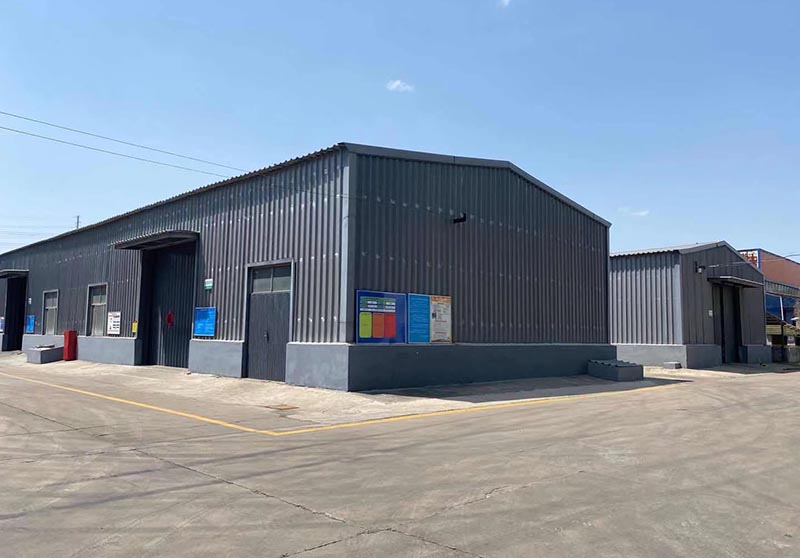
Verifiable operations, modern warehousing, and standardized container packing protocols help ensure material integrity during transit.
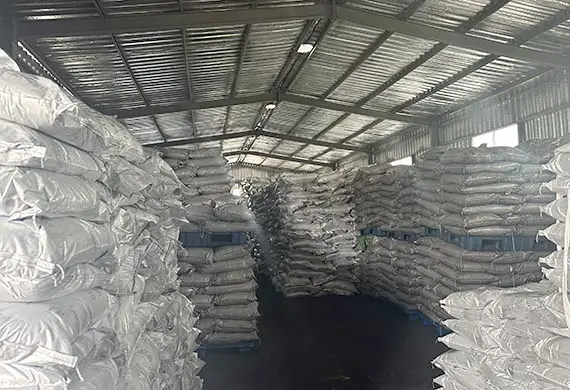
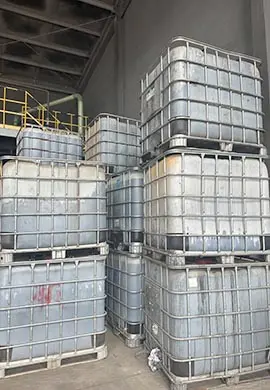
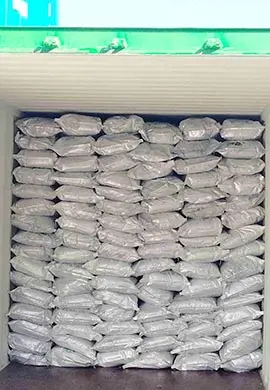
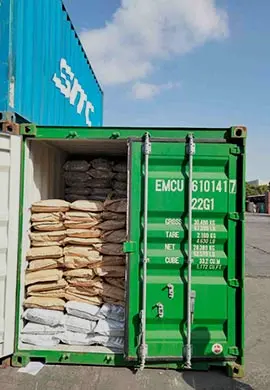
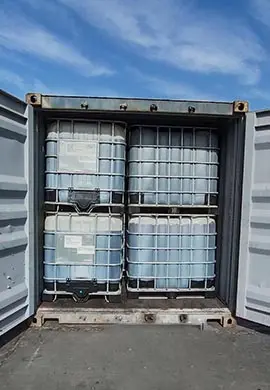
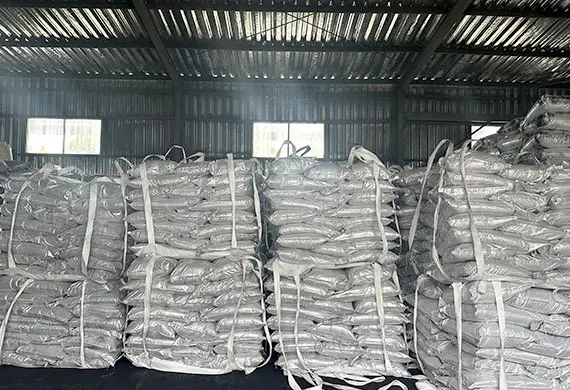
Tianjin Sunrise Chem Group manages supply lanes serving mills, plastics compounders, and paper manufacturers worldwide. Our logistics practices focus on secure packaging, moisture barrier protections, and standard loading schemes to maintain chemical stability during long transit times.
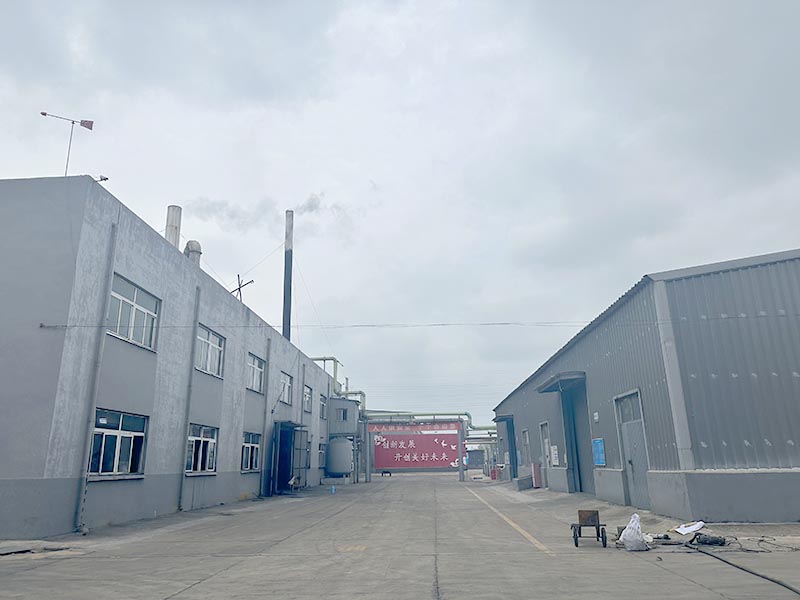
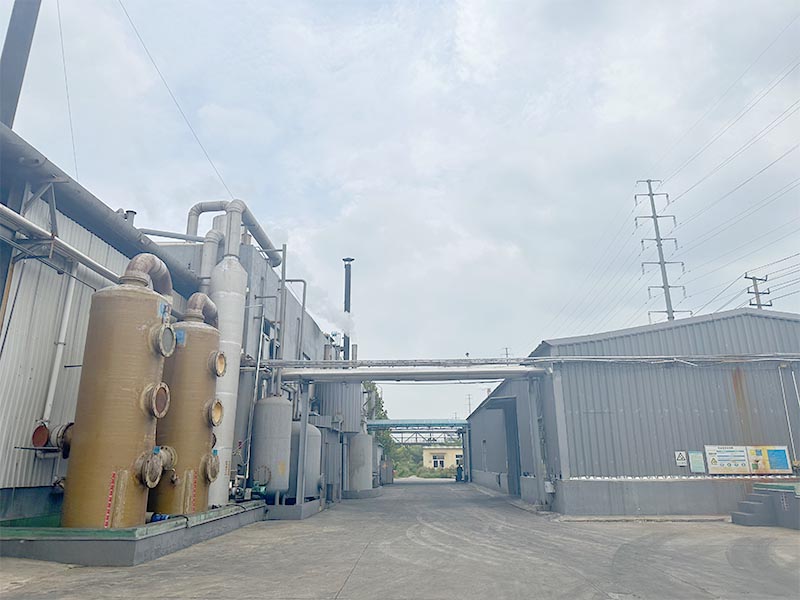
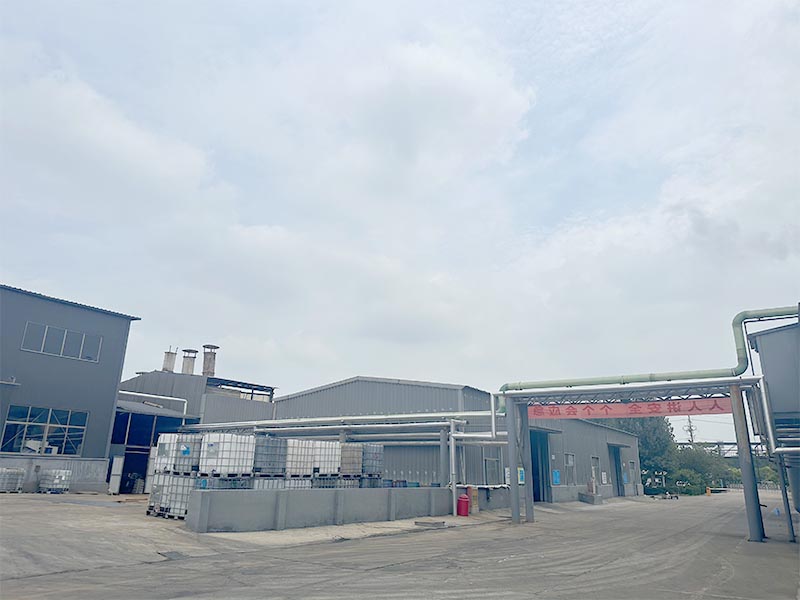
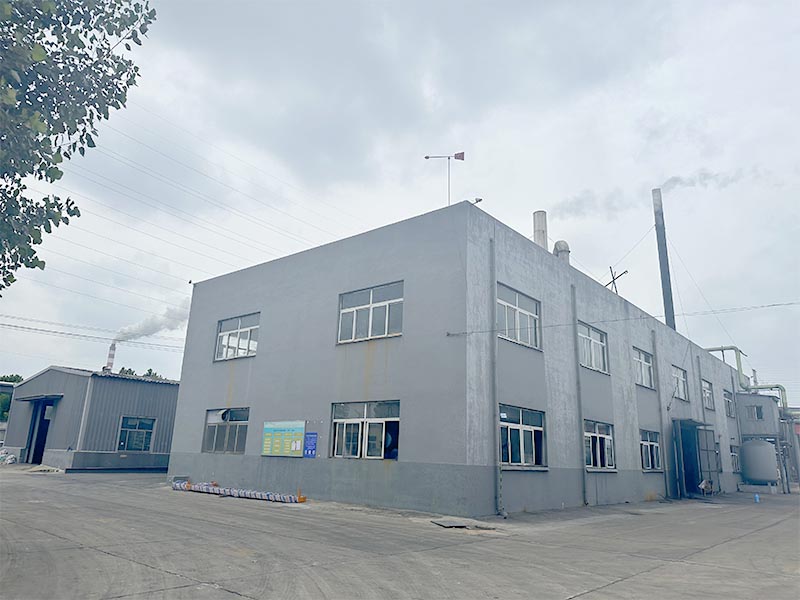
Explore our specialized range of dye variants, organic liquid dispersions, and custom synthetic pigments developed for high-end industrial operations.
In addition to the main offerings, we maintain research files and reference standard batches for several specialty dyestuffs, including:
Addressing key considerations in chemical purity, compliance, and material selection.
 Sunrise