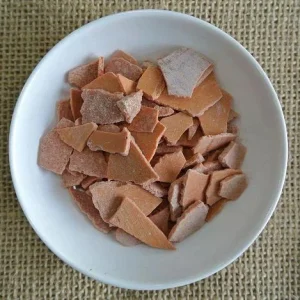
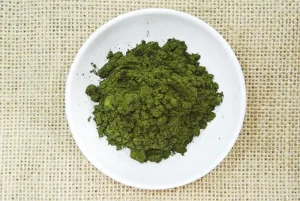
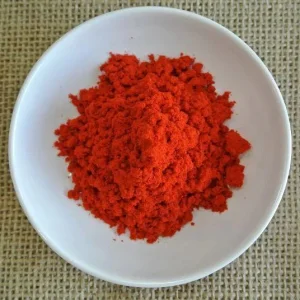
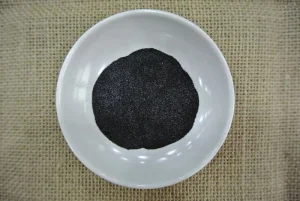
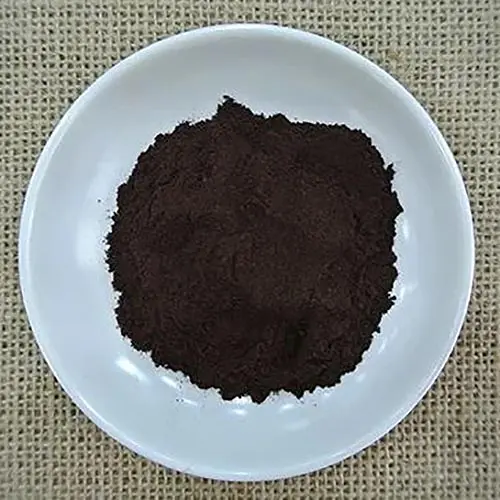
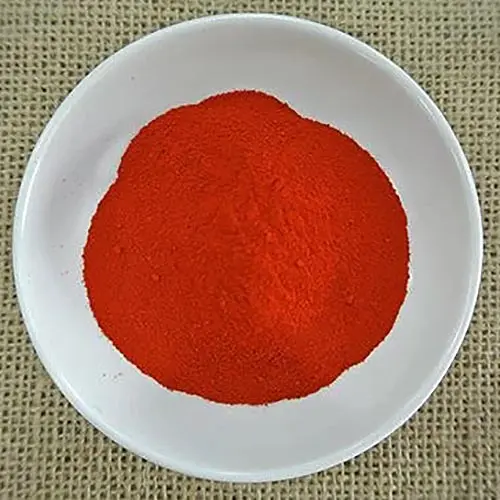
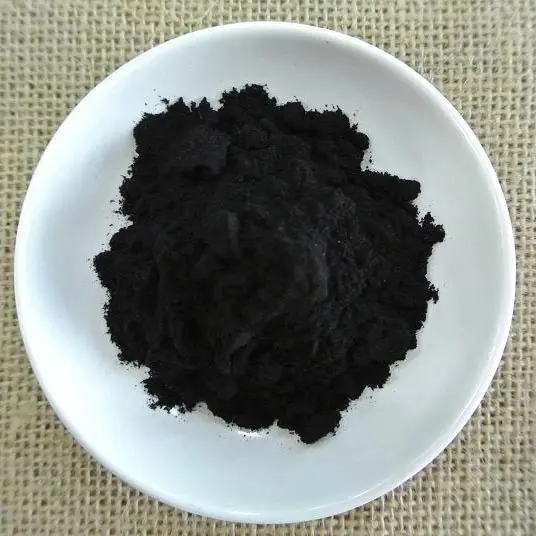
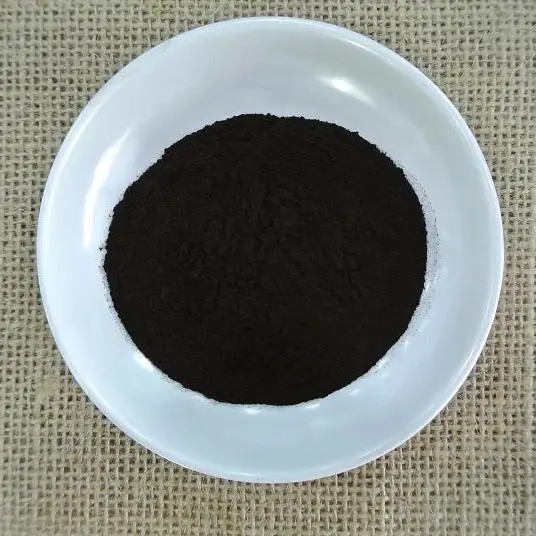
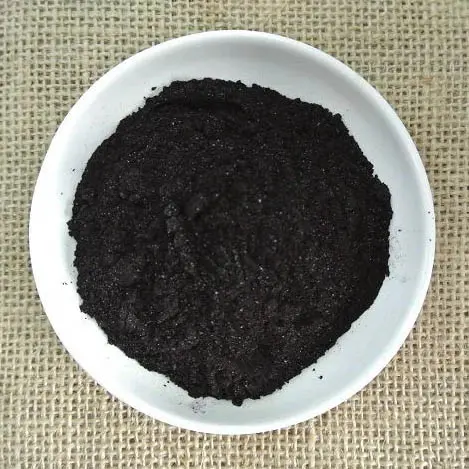
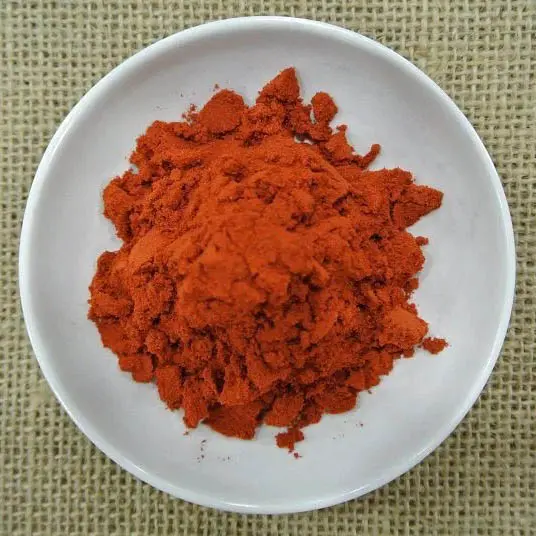
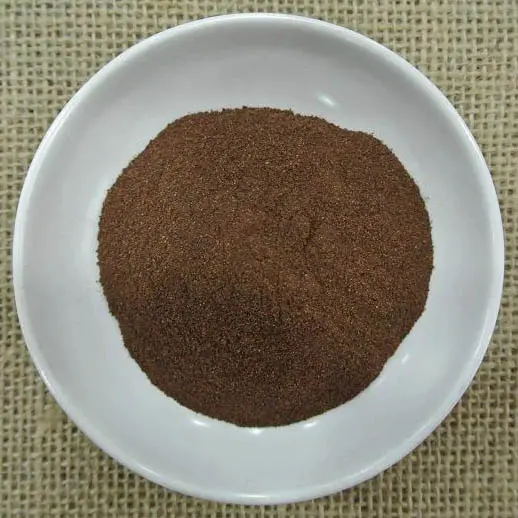
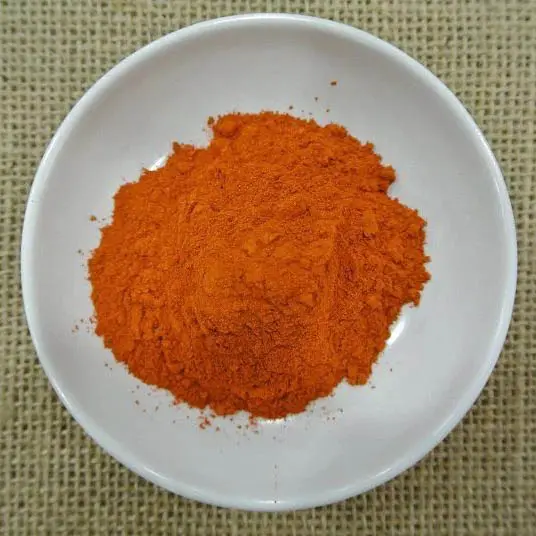
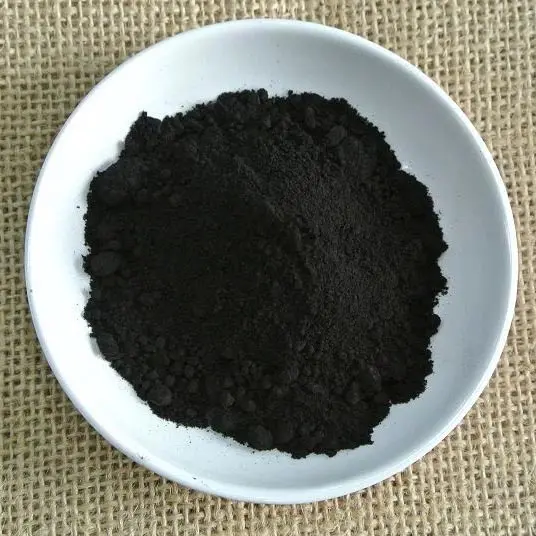
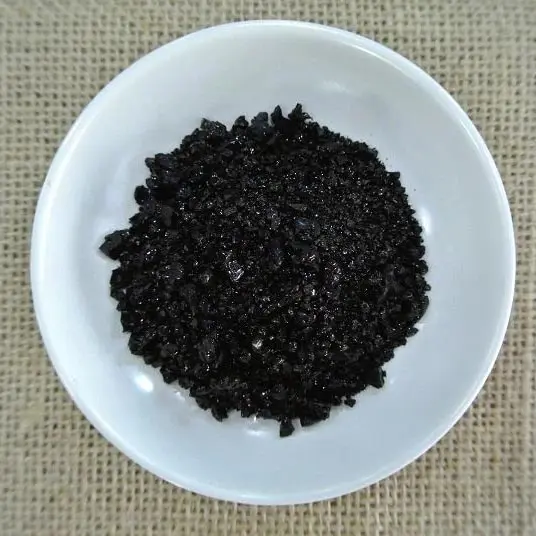
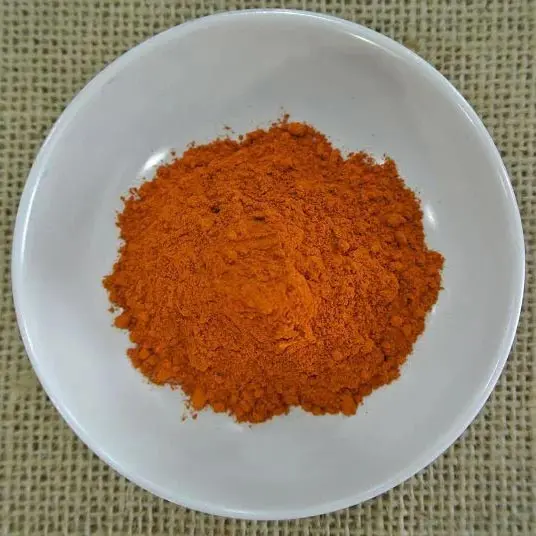
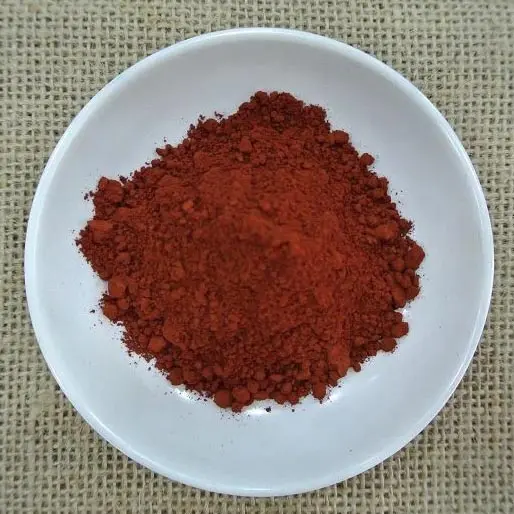
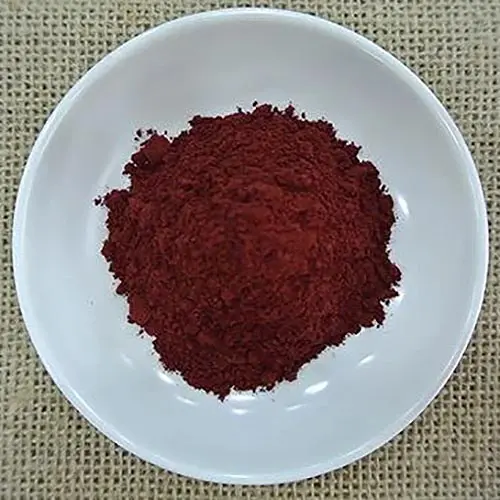
Explore our highly-stabilized product range, designed to meet rigorous international quality systems and deliver extreme color consistency.
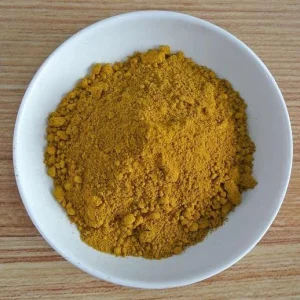
Basic Yellow 2 (commonly classified under Auramine O, C.I. 41000) represents a corner-stone diarylmethane-based dyestuff, renowned globally for its intense brilliant yellow coloration, exceptional tinting strength, and high cost-efficiency. Industrially, the product is an indispensable component in large-scale paper manufacturing, wood staining, and acrylic fiber printing. Its unique cationic charge allows direct affinity to negatively charged lignocellulosic fibers, making it the most critical dye in unbleached packaging, Kraft paper, and board manufacturing.
Over the past decade, the global dyestuff market has transitioned from pure cost-driven procurement to value-centric compliance sourcing. Environmental mandates in major production hubs, combined with supply-chain vulnerabilities, have positioned experienced suppliers as vital links in industrial ecosystems. Today's global mills require raw materials that guarantee not only high purity and color-matching precision but also compliance with strict ecological benchmarks like ZDHC and GOTS. Our production framework addresses this shift, combining advanced chemical synthesis with strict quality gates.
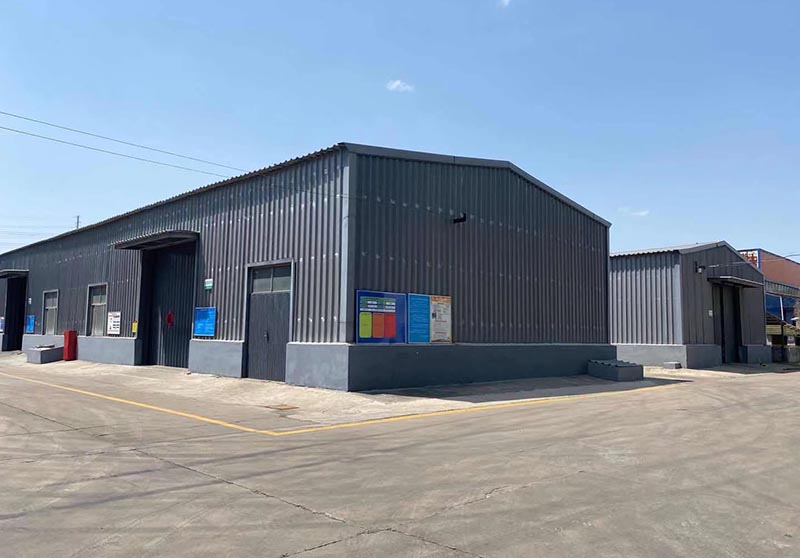
How modern chemical engineering transforms raw intermediates into high-purity Basic Yellow 2 with minimal environmental footprint.
The synthesis of Basic Yellow 2 initiates with the high-yield condensation of N,N-dimethylaniline and formaldehyde to yield the intermediate Michler's hydrol. Our facility utilizes advanced microchannel reactors to optimize thermodynamic stability, maximizing reaction efficiency and minimizing structural isomers.
Following intermediate formation, the product undergoes critical amination in the presence of ammonium chloride and urea. By utilizing strict temperature ramps and high-purity gas feeds, we achieve highly uniform crystallites, reducing fine dust and optimizing dye dissolution rates for automated dosing systems.
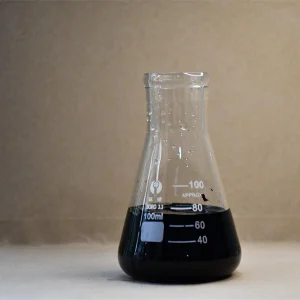
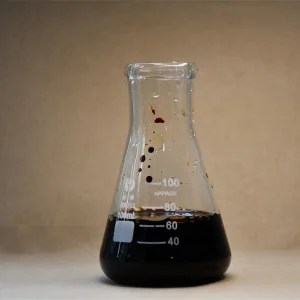
Driven by automation trends in European and North American paper mills, our R&D team is accelerating the shift toward stabilized, low-salt liquid formulations of Basic Yellow 2. This removes the dissolution step entirely, ensuring zero dust contamination and facilitating closed-loop industrial processes.
Analyzing the performance of Basic Yellow 2 across critical manufacturing verticals under localized processing conditions.
In brown Kraft packaging and corrugated cardboard, Basic Yellow 2 functions as the key color corrector to maintain batch-to-batch shade uniformity. Unbleached chemical pulp and mechanical pulp carry high levels of residual lignin with carboxylic acid groups, creating natural anchor sites for our cationic diarylmethane dye. The electrostatic bond ensures minimal run-off in backwaters and maximum color yields.
For synthetic acrylic fibers, dye molecules containing strong basic groups like Basic Yellow 2 exhibit exceptional light fastness and wash fastness. Acrylic fibers, manufactured with anionic comonomers (such as sodium sulfonate groups), bind tightly with the dye molecules. The result is a vibrant, non-fading yellow color palette highly preferred in textiles, performance blankets, and carpet backings.
During the retanning and finishing stages of leather production, Basic Yellow 2 is utilized as a shading agent, especially to top off crusts dyed with anionic dyes. Through controlled pH adjustments, the basic dye forms a stable complex on the leather surface, resulting in a rich, velvety color profile. Our formulation ensures that leather surfaces remain smooth and maintain their natural grain pattern without stiffness.
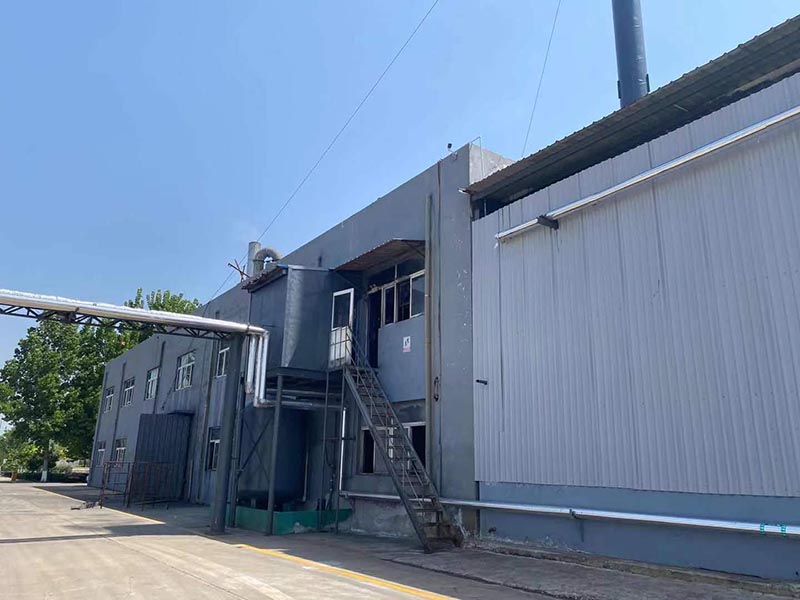
As a leading China-based dyestuff manufacturing group, Tianjin Sunrise Chem Group stands out for its strong supply chain integration. We maintain close partnerships with major upstream petrochemical suppliers, securing a steady flow of primary intermediates such as N,N-dimethylaniline. This vertical coordination insulates our clients from raw material market fluctuations, offering stable pricing even during periods of global supply chain volatility.
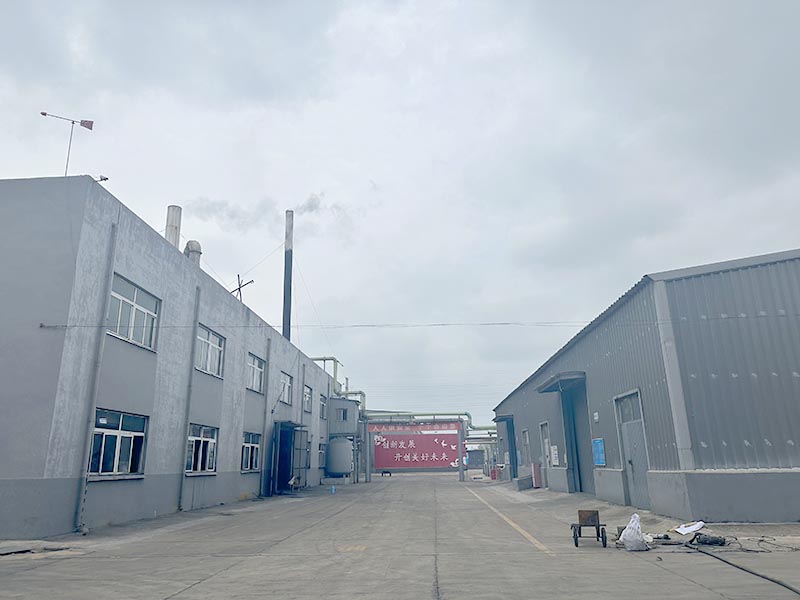
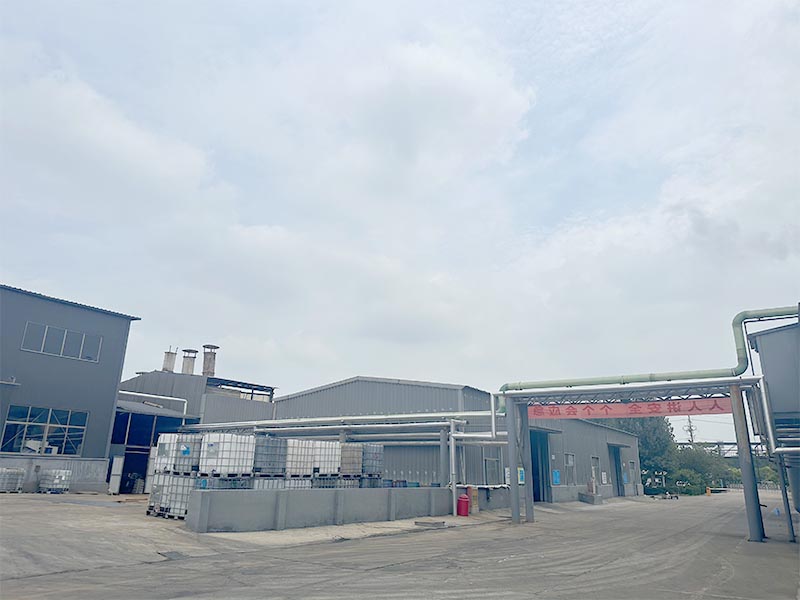
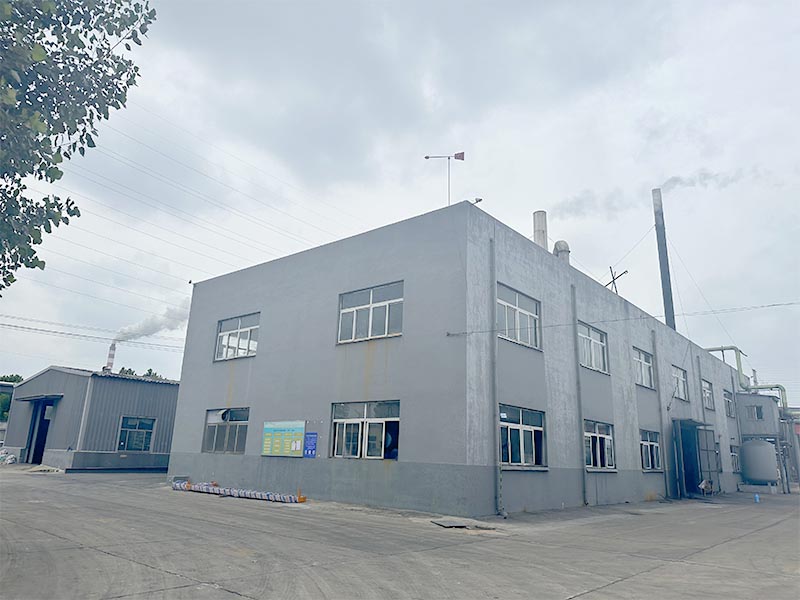
Our manufacturing complex in Tianjin is designed for continuous, high-efficiency output. By integrating automated quality verification systems directly into our synthesis lines, we minimize processing waste while maximizing daily yields. In addition, our strategic location near Tianjin Port enables rapid dispatch, cutting shipping times to major markets in Southeast Asia, Europe, and South America, while maintaining robust stock reserves for immediate global container loading.
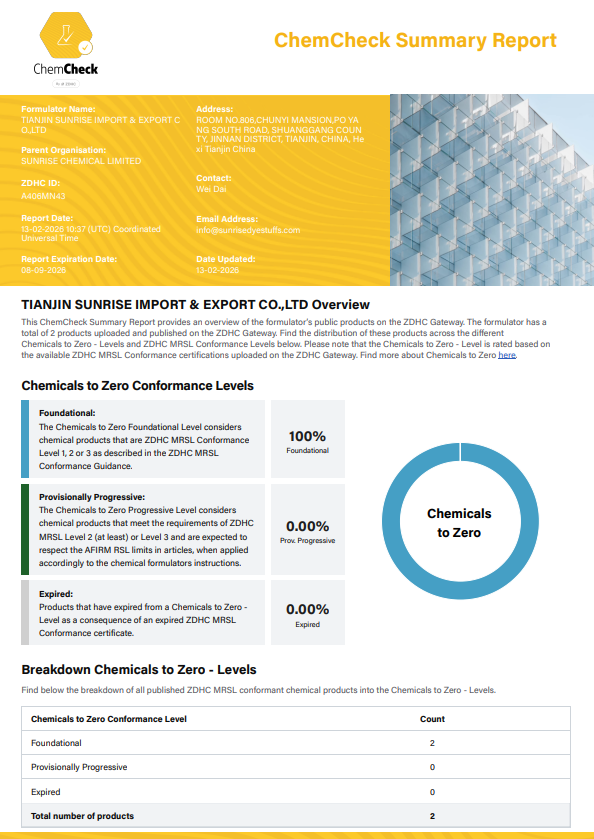
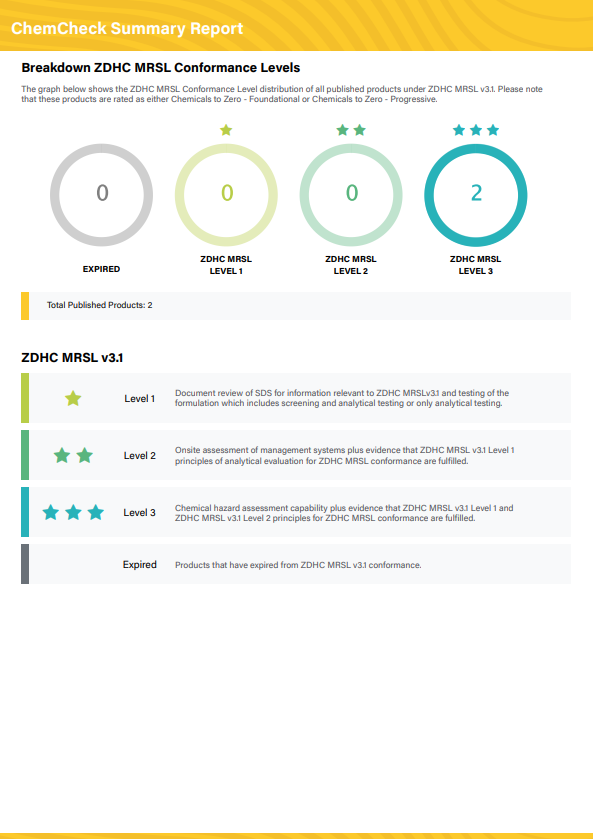
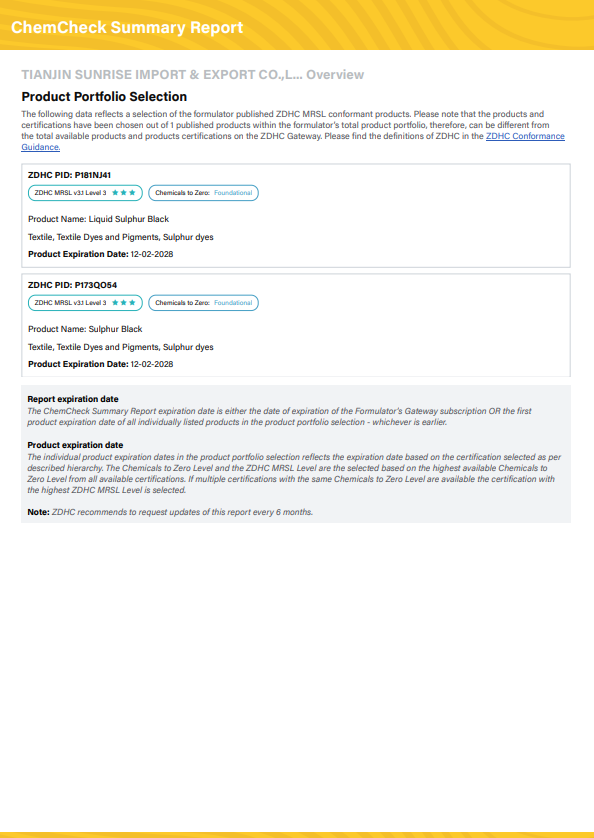
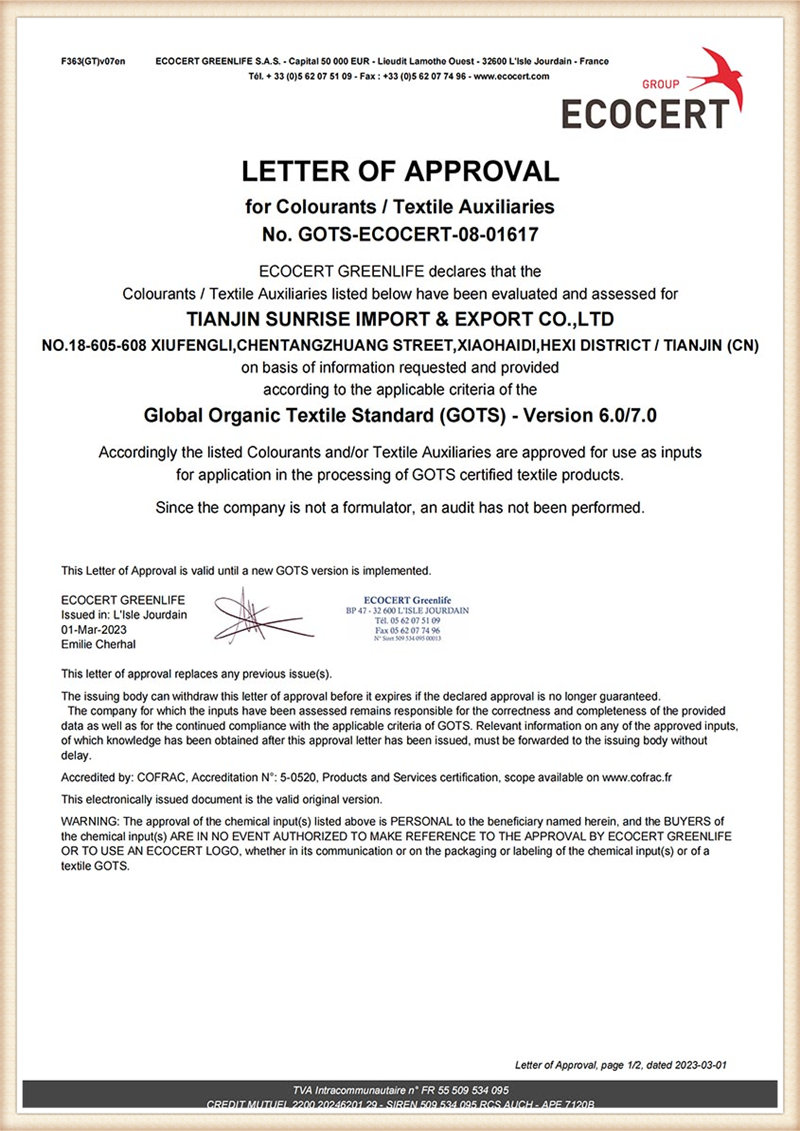
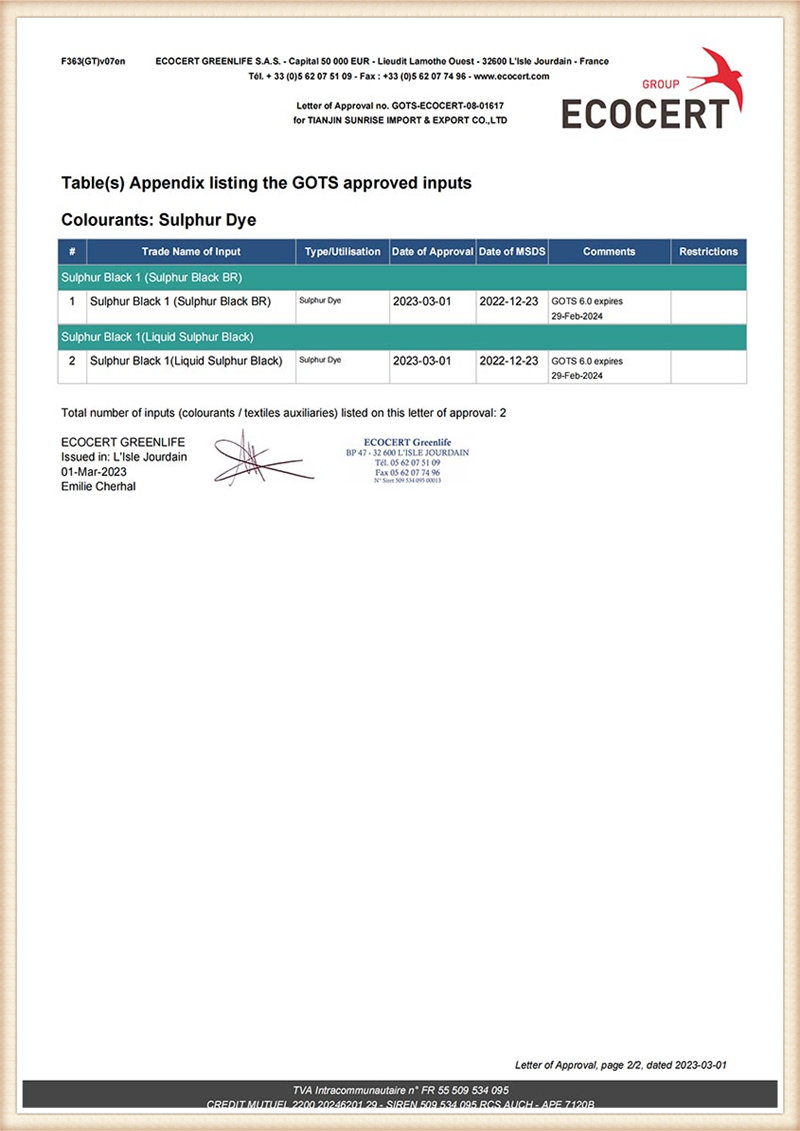
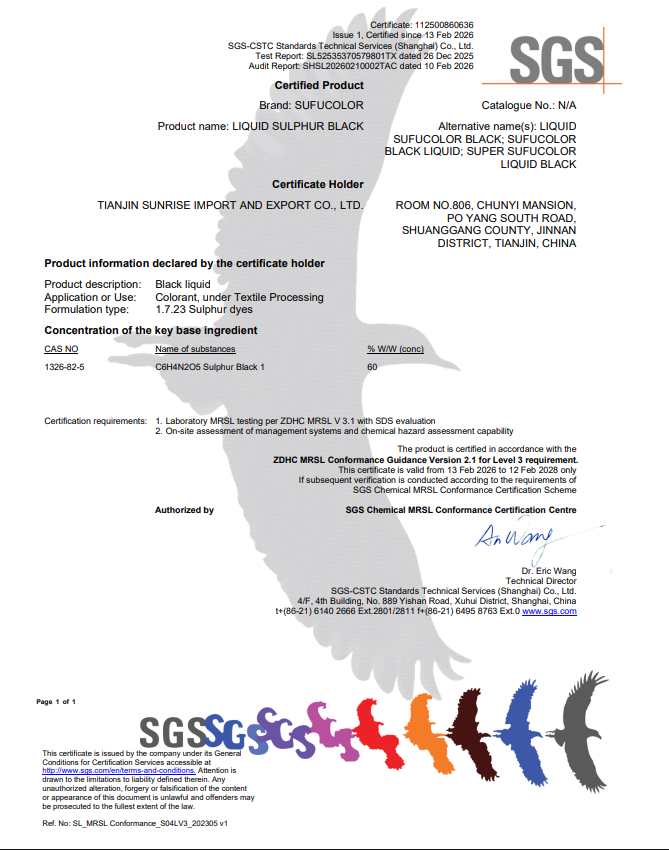
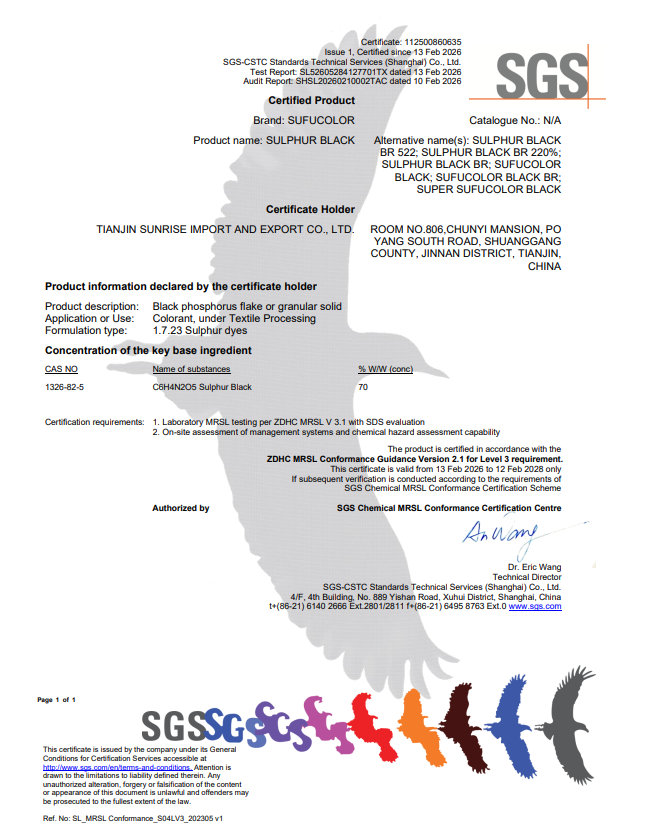
Today, compliance is a core requirement for major global brands. Tianjin Sunrise Chem Group is committed to environmental protection, integrating sustainability into all our production processes. Our certifications, including ZDHC Level 3 and the Global Organic Textile Standard (GOTS), reflect our focus on reducing hazardous chemicals across our supply chain.
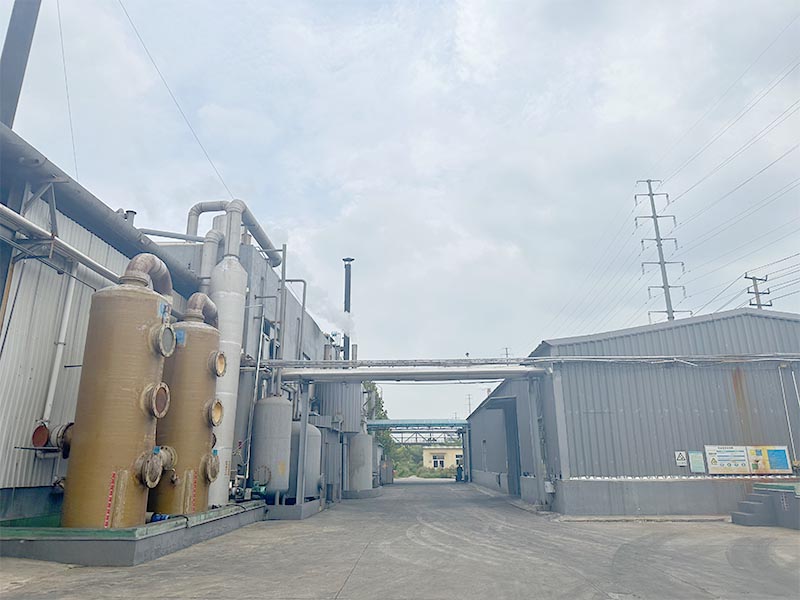
By using modern wastewater treatment systems and optimizing our synthesis chemistry, we minimize the discharge of inorganic salts and by-products. This allows paper and textile mills using our colorants to meet strict local environmental regulations, reduce their chemical output, and contribute to a more sustainable future.
Detailed technical answers addressing common queries from dyehouse managers, application engineers, and purchasing teams.
Complete your supply chain with our range of high-performance organic dyes and industrial pigments.
A look at our storage capacity, logistics operations, and global shipping preparations.
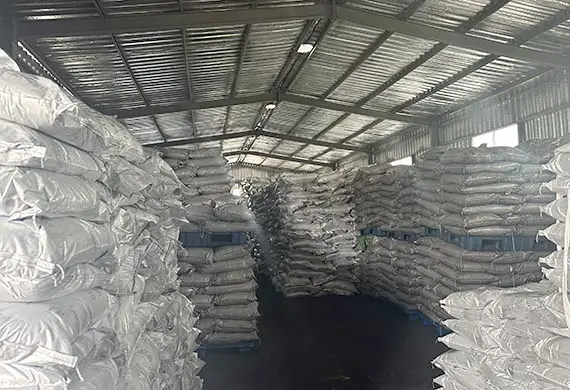
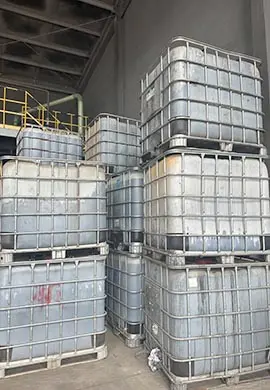
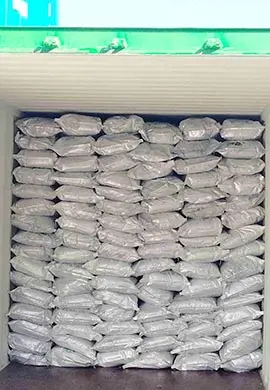
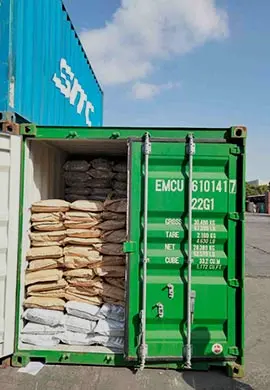
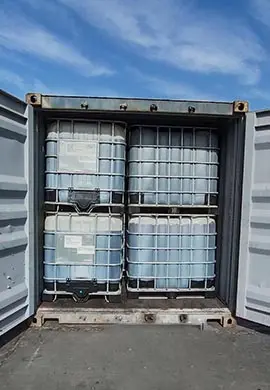
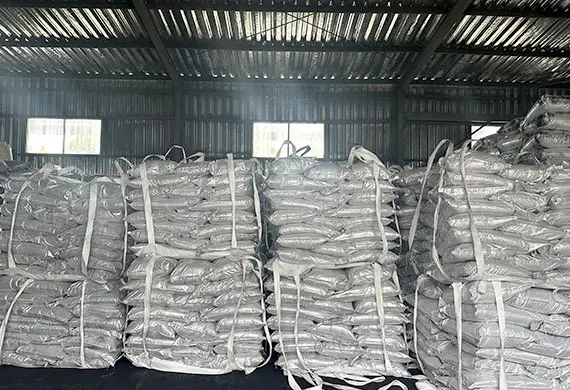
We work closely with paper mills, textile operations, and chemical distributors worldwide to ensure stable deliveries. Our logistics systems allow us to coordinate container space, optimize transit routes, and provide tracking from our warehouse in Tianjin to final delivery ports.
Our goal is to support our customers' supply security. By maintaining strategic reserves of key products and using structured loading processes, we minimize delays and help our partners maintain continuous operations.
Explore additional targeted industrial dyes designed for specialized textile, paper, and leather applications.
 Sunrise