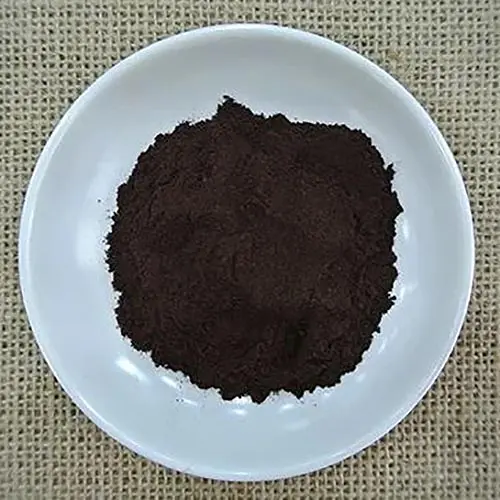
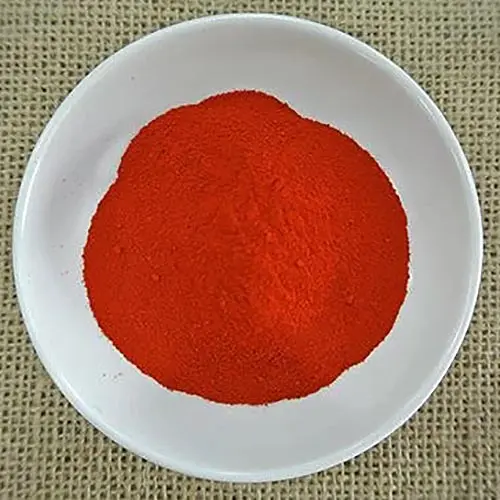
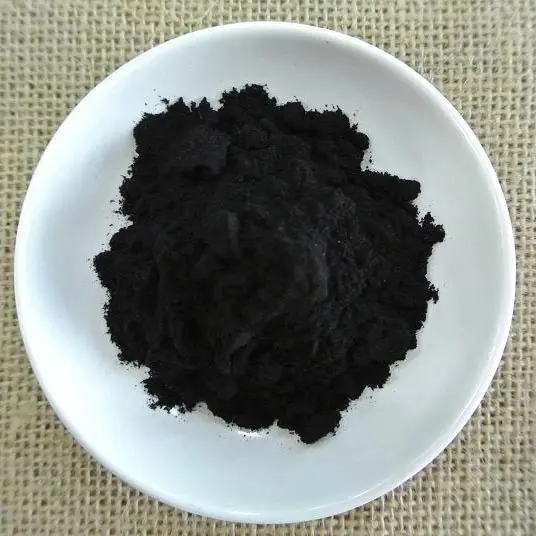
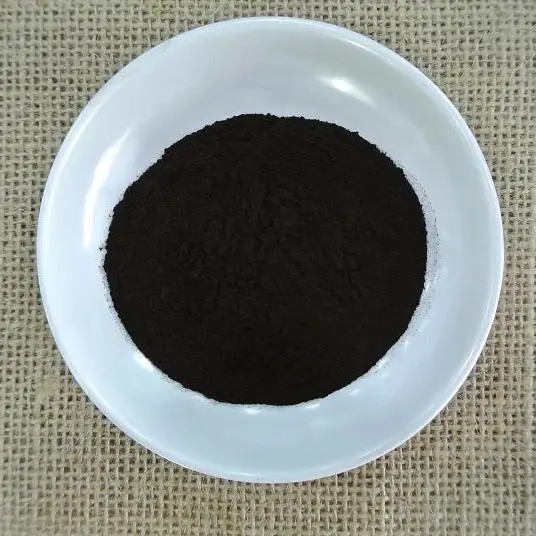
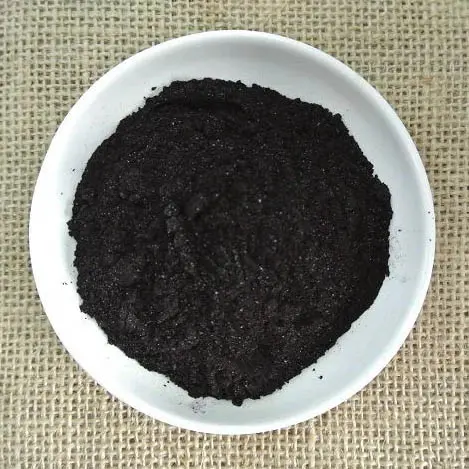
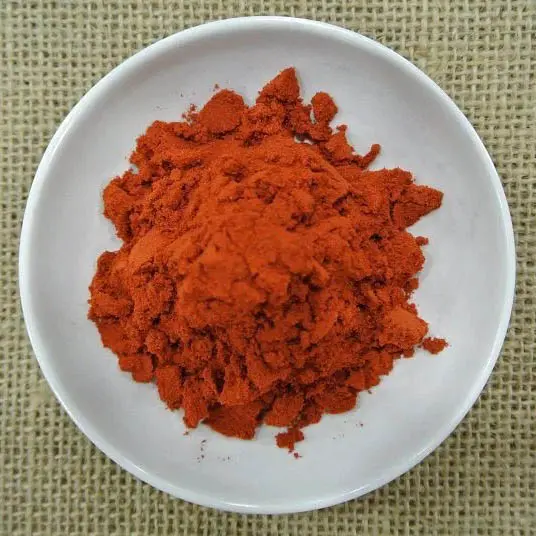
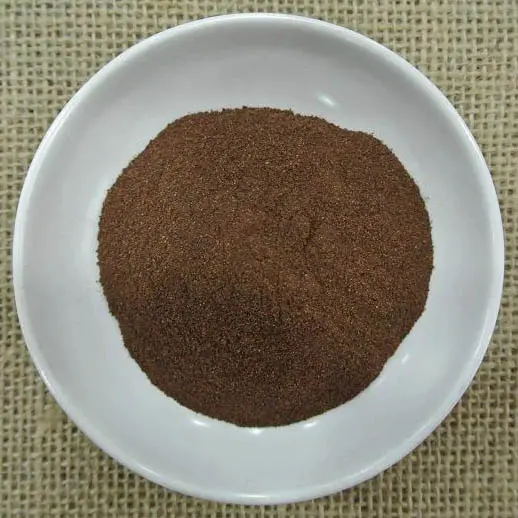
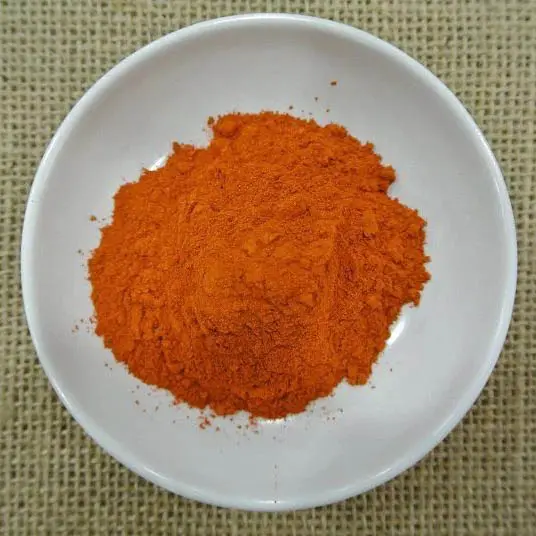
Explore our core selection of high-yield industrial dyestuffs and specialized chemical formulations.
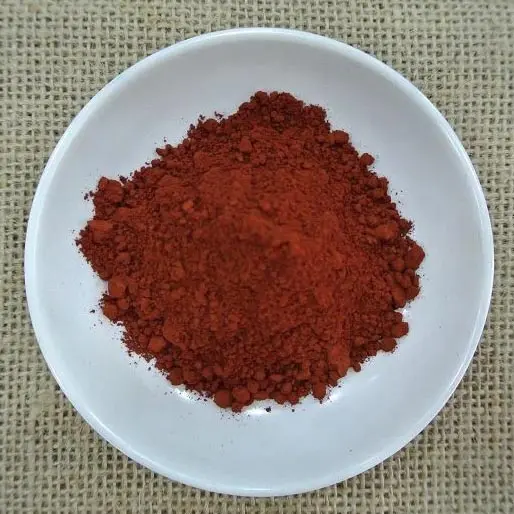
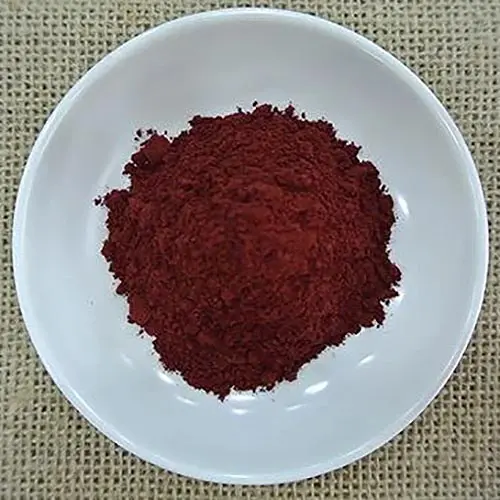
Direct Red F2g, chemically designated as a multi-azo dye structure, is a crucial synthetic organic compound recognized in the textile, paper, and leather processing fields for its high substantive affinity toward cellulosic matrices. Featuring a highly planar aromatic geometry rich in conjugated double bonds, its molecular layout allows close alignment with cellulose chains. This spatial conformation enables substantial hydrogen bonding and Van der Waals interactions directly with the hydroxyl groups of the substrate, minimizing reliance on mordants or synthetic fixing agents.
Unlike basic or acid alternatives, Direct Red F2g contains multiple sulfonic acid salt functional groups (-SO3Na) which guarantee balanced water solubility, stable aqueous dispersion, and uniform migration behavior. Industrial suppliers offer this dye in different purity grades, optimizing salt levels to modulate strike rates and final exhaustion yields. This structural optimization ensures outstanding buildup properties and deep shades on cotton, regenerated rayon, and composite pulp fibers.
Applying Direct Red F2g effectively requires deep control over the thermodynamics of exhaustion. The direct dyeing mechanism is endothermic and temperature-driven; the rate of fiber diffusion increases progressively with temperature, typically peaking between 85°C and 95°C. In aqueous environments, cellulose fibers develop a negative surface potential (zeta potential) that naturally repels anionic dye molecules. To overcome this electrical repulsion barrier, electrolyte agents such as sodium chloride or sodium sulfate (Glauber’s salt) are added to the dye bath.
The addition of sodium cations neutralizes the negative surface charge of the fiber, enabling the long dye molecules to approach the substrate close enough for intermolecular forces to take effect. Professional operators must manage temperature curves and salt dosing profiles carefully to avoid premature precipitation. Standard application guidelines suggest a linear heating curve followed by split salt additions, guaranteeing level coverage and avoiding typical surface flaws like bronzing or unlevel color distribution.
Our commitment to quality, capacity, and global supply chain resilience.
How modern supply chains, regulatory environments, and chemical engineering shape the sourcing of Direct Red F2g.
Industrial centers in Asia, particularly in North China hubs like Tianjin, represent the majority of Direct Red F2g production. Tianjin Sunrise Chem Group utilizes optimized chemical manufacturing loops to secure and stabilize raw material supply, reducing reliance on external intermediate sources.
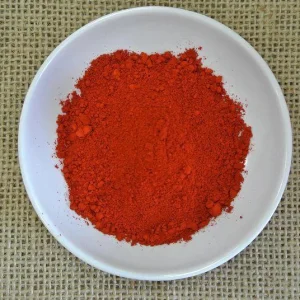
Our bulk-manufacturing models and optimized synthetic loops allow us to offer competitive, discount pricing on high-grade Direct Red F2g. We maintain a high active dye concentration, ensuring that clients reduce their overall consumption per ton of fiber.
Regulatory requirements like REACH, ZDHC, and GOTS demand strict chemical limits on heavy metals, free aromatic amines, and unsulfonated by-products. Our production focuses on environmental safety, helping downstream mills meet high regulatory standards.
Tailored performance characteristics across textiles, paper, and leather substrates.
In continuous dyeing lines and exhaust bath plants, Direct Red F2g delivers high color yield on cotton knits, viscose fabrics, and cotton-polyester blends. Its excellent leveling properties make it well-suited for high-volume denim yarn dyeing, where consistency is critical. Adding specialized cationic fixing agents after dyeing significantly improves wash fastness and wet-rubbing properties, preventing color bleeding during laundering.
The paper industry uses Direct Red F2g for coloring tissues, decorative laminates, and specialty craft stocks. It features high affinity for bleached kraft and chemical wood pulps, allowing it to exhaust fully into the stock without leaving heavily colored backwater. This efficiency simplifies wastewater treatment. The dye shows minimal sensitivity to sizing agents, producing reliable shades even under varying pH levels.
For chrome-tanned and vegetable-tanned leathers, Direct Red F2g provides deep fiber penetration and excellent grain coverage. Applying the dye in slightly acidic retanning baths helps it distribute evenly through the leather cross-section before fixing. It is compatible with typical fatliquors and synthetic tanning agents, keeping the finished leather soft and bright.
Investing in cleaner chemistry, bio-based intermediates, and automated manufacturing processes.
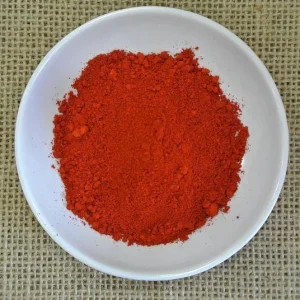
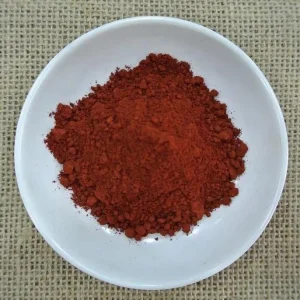
Upgrading membrane filtration systems in our production lines to remove residual inorganic salts and trace organic impurities. This filtration ensures a highly concentrated, low-dust powder dye and stable liquid versions.
Developing synthesis routes that use bio-derived coupling components, reducing reliance on fossil fuel intermediates and helping lower the overall carbon footprint of our textile dyes.
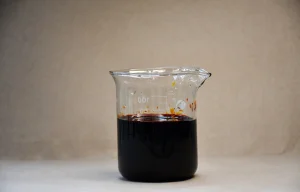
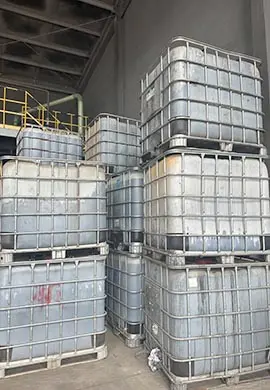
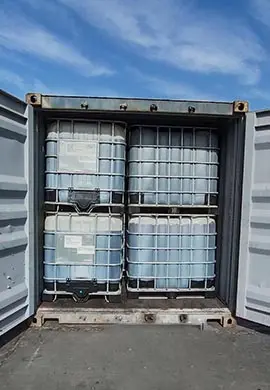
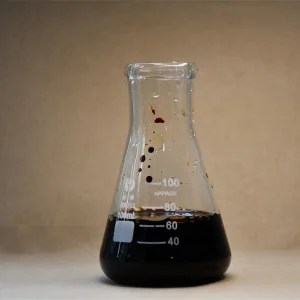
Creating liquid dye solutions compatible with automatic dispensing systems, helping mills reduce chemical waste, improve shade repeatability, and lower labor costs.
A trusted partner for high-performance dyestuffs and sustainable chemical solutions.
Tianjin Sunrise Chem Group specializes in manufacturing high-quality dyestuffs. Our comprehensive portfolio includes Direct dyes, Acid dyes, Basic dyes, Sulphur dyes, Solvent dyes, Liquid dyes, and Fluorescent dyes.
Backed by decades of industry and export experience, we have built a reputation for reliability and excellence, serving clients from diverse sectors including denim, textile, leather, paper, and plastics.
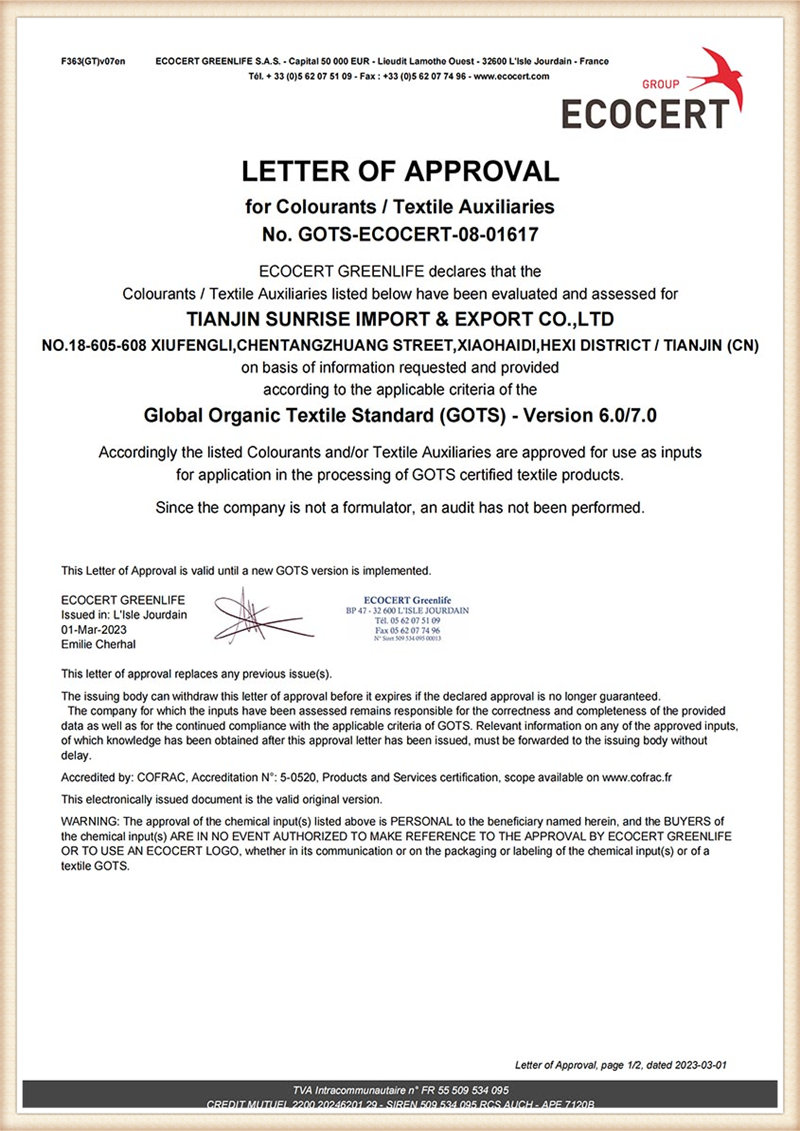
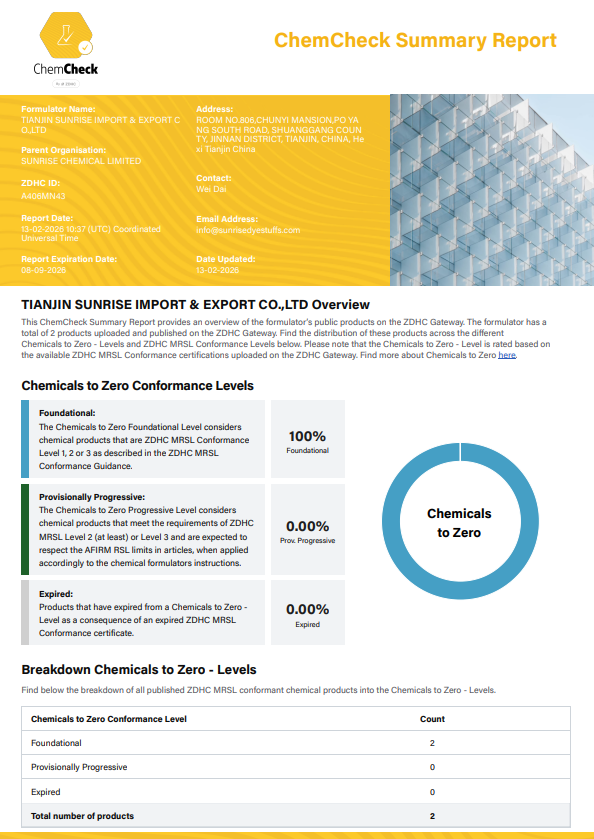
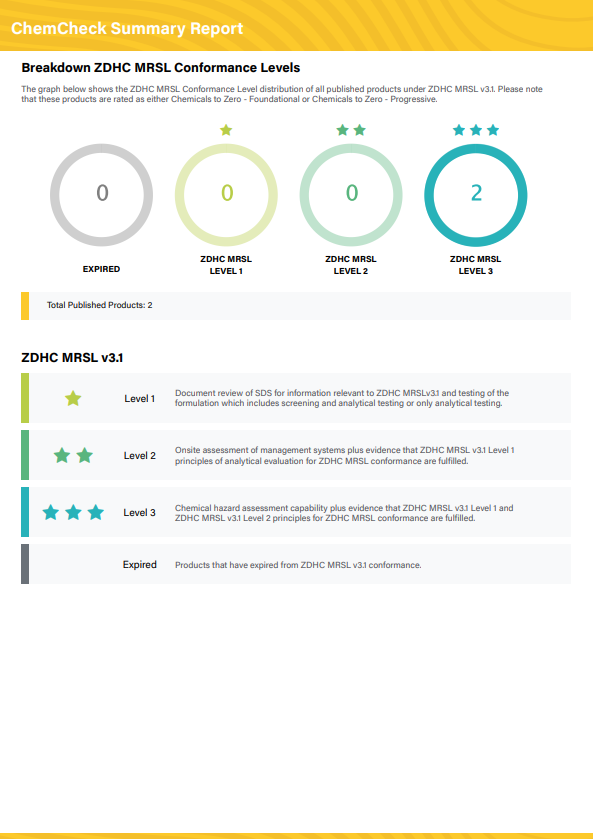
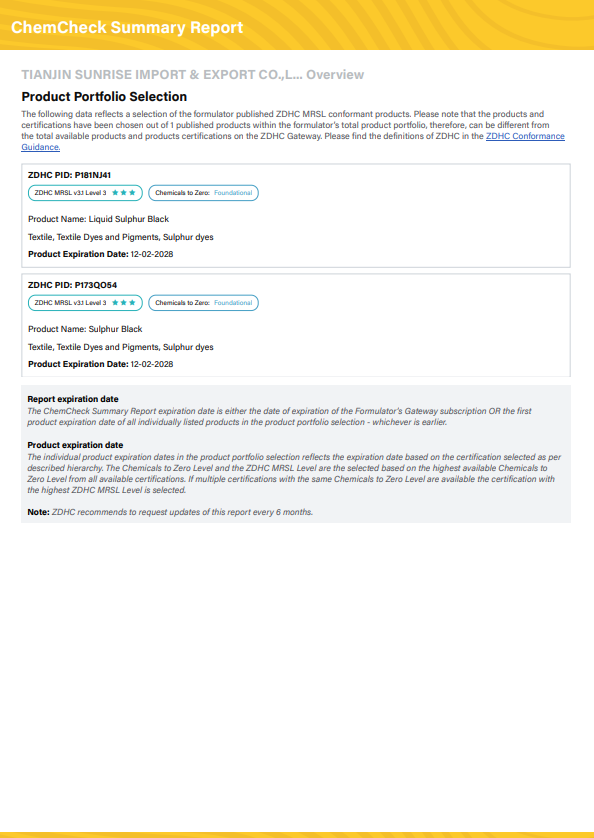
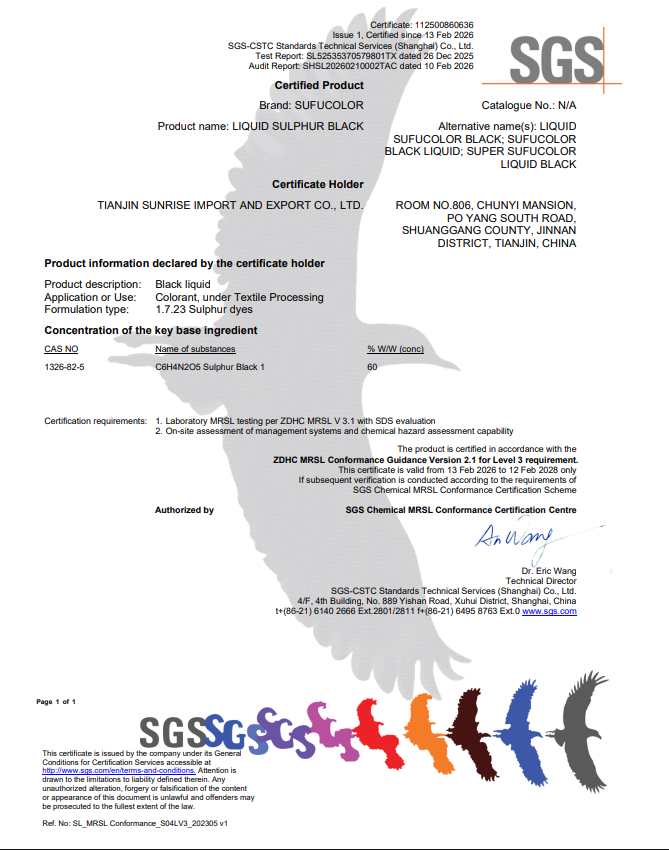
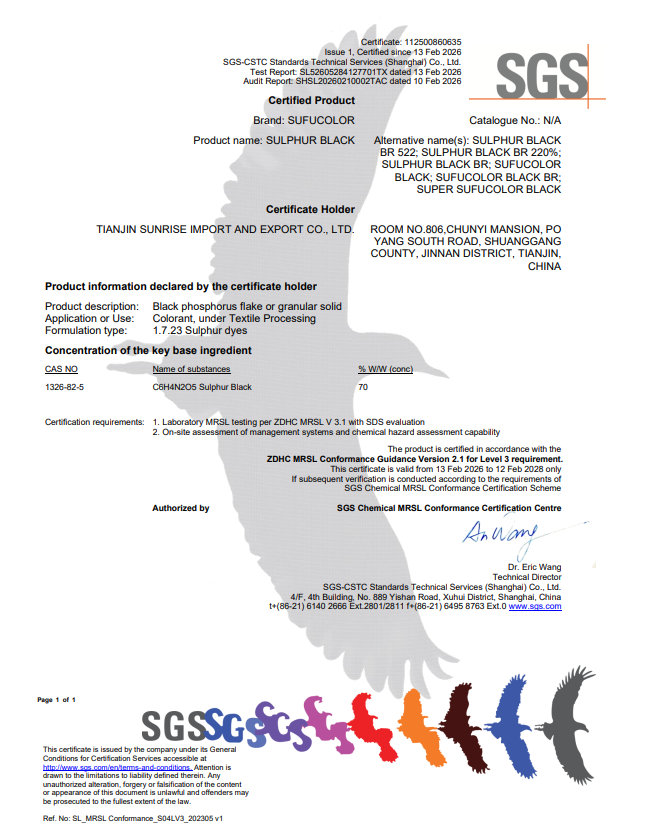
We maintain a strong focus on consistent quality and batch stability. Every shipment is thoroughly tested before sending to the port. Our ZDHC Level 3 and GOTS certifications provide reliable quality assurance for your production requirements.
We pride ourselves on offering customized solutions. Our team of experts works closely with clients to understand their unique needs and deliver tailored products. We actively seek strategic partnerships to expand our reach and support mutual growth.
Environmental protection is central to our development. We focus on providing eco-friendly, high-quality colorants that balance production efficiency with environmental care, supporting sustainable progress in the global textile industry.
High-affinity color formulations optimized for leather, pulp, and synthetic fiber substrates.
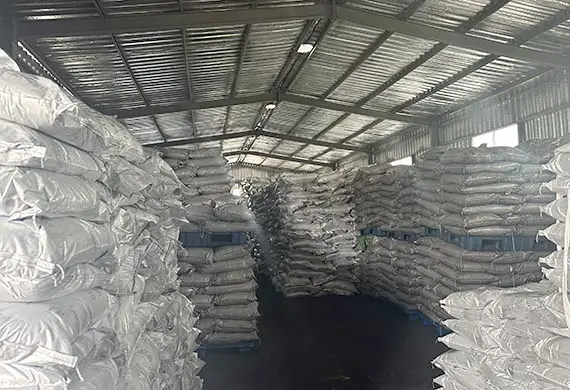
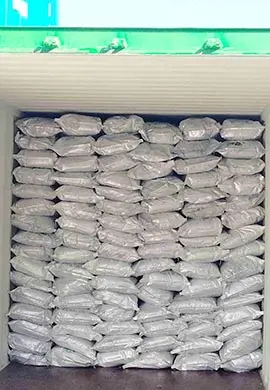
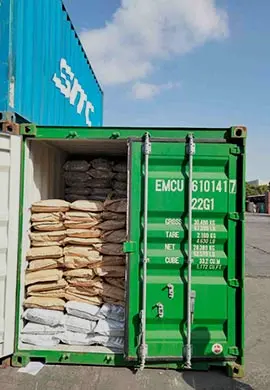
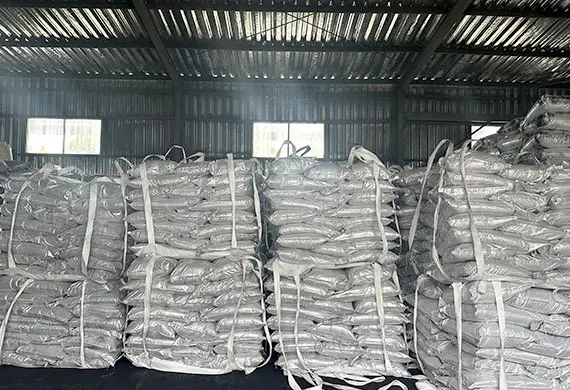
Ensuring timely shipment, clean containment, and structured quality testing for all orders.
Cooperating with textile and paper mills for many years reflects our strong and reliable business relationships. This kind of long-term collaboration brings numerous benefits, including consistent order planning, shared technical resources, and mutual support.
It highlights our track record of delivering quality products that meet the needs of our partners. Our mission is to support client business growth by providing reliable, custom products and attentive customer service, building lasting partnerships as a supplier.
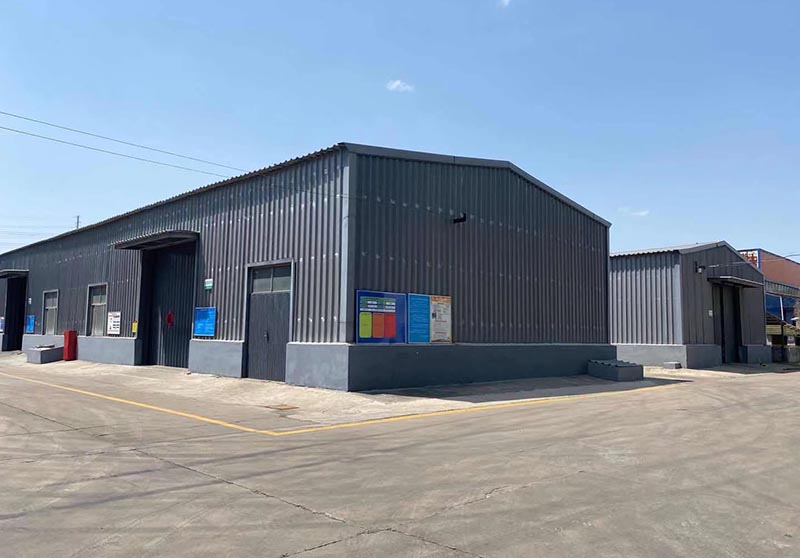
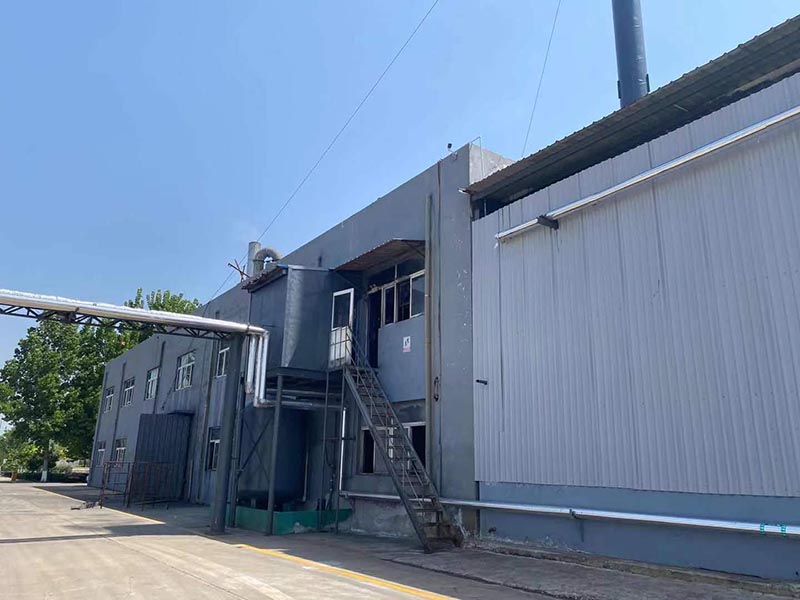
One key advantage we provide is a stable supply of dyes. We have optimized our manufacturing workflows to support consistent product availability. Our facilities feature modern equipment and an experienced technical team to help handle demanding bulk orders efficiently.
Beyond a steady supply, quality control is a central focus. At SUNRISE CHEM, we work to keep our colorants aligned with industry expectations. Our technicians monitor the manufacturing process, checking key parameters like color fastness and solubility for each batch.
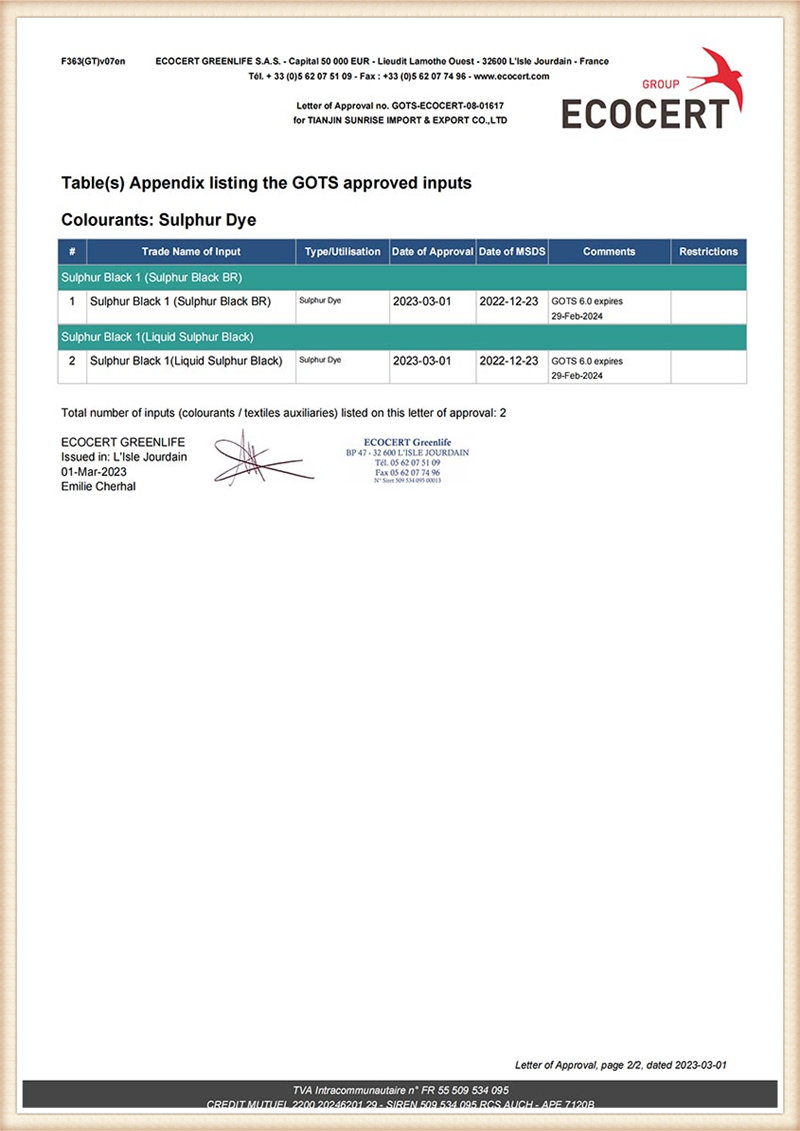
Our active involvement with the ZDHC and GOTS frameworks supports clean chemical management. The ZDHC program focuses on reducing hazardous chemical release across textile supply chains. Achieving ZDHC Level 3 status indicates that we have implemented chemical tracking and wastewater monitoring procedures. Similarly, GOTS certification verifies the organic and social criteria of our textile processing inputs, providing a transparent chemical foundation for our global partners.
Technical guidance and application advice for sourcing Direct Red F2g.
Direct Red F2g (chemically related to Direct Red 224 classifications) is an anionic direct dye featuring a planar polyazo structure. It is designed to dye cellulosic materials like cotton, viscose, and paper pulp without requiring a mordant. It functions via hydrogen bonding and Van der Waals interactions directly with substrate hydroxyl groups.
Cellulose fibers carry a negative surface charge in water, which repels the anionic dye molecules. Adding salt (such as sodium chloride or Glauber’s salt) introduces sodium cations that screen this negative charge, allowing the dye molecules to approach and bind to the fiber.
ZDHC Level 3 is a high level of chemical conformance. It indicates that the manufacturing process is audited to prevent the use of banned substances and restrict hazardous chemicals. Sourcing from a certified supplier helps mills meet clean production criteria and simplify chemical verification.
Direct dyes generally have moderate wet fastness. Post-dyeing treatments using cationic fixing agents or cross-linking agents help seal the dye molecules on the fiber, improving wash and wet-rubbing resistance.
Our quality control lab tests each batch for shade matching, strength, and solubility. We issue a Certificate of Analysis (COA) for every shipment to confirm it meets standard parameters before delivery.
High-solubility liquid and powder formulations for textile, paper, and leather processing plants.
 Sunrise