Explore our premium selection of industrial dyes, brighteners, and colorant formulations developed for the global manufacturing sector.
Tianjin Sunrise Chem Group stands at the forefront of chemical manufacturing, specializing in high-grade dyestuffs. Our integrated production lines produce an extensive array of Direct dyes, Acid dyes, Basic dyes, Sulphur dyes, Solvent dyes, Liquid dyes, and Fluorescent dyes. Backed by decades of industrial manufacturing and export excellence, we have established ourselves as an authoritative partner for industries across the globe—spanning denim processing, textile manufacturing, leather tanning, paper mills, and polymer production.
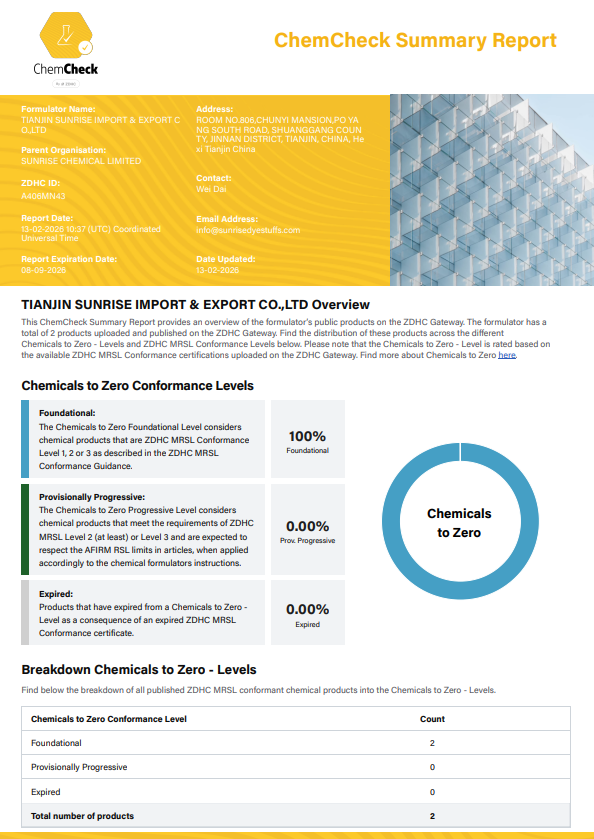
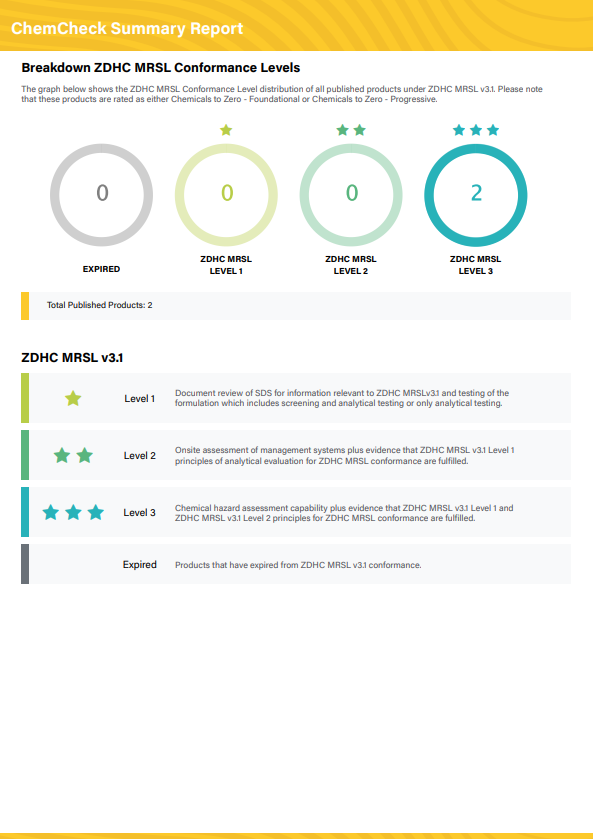
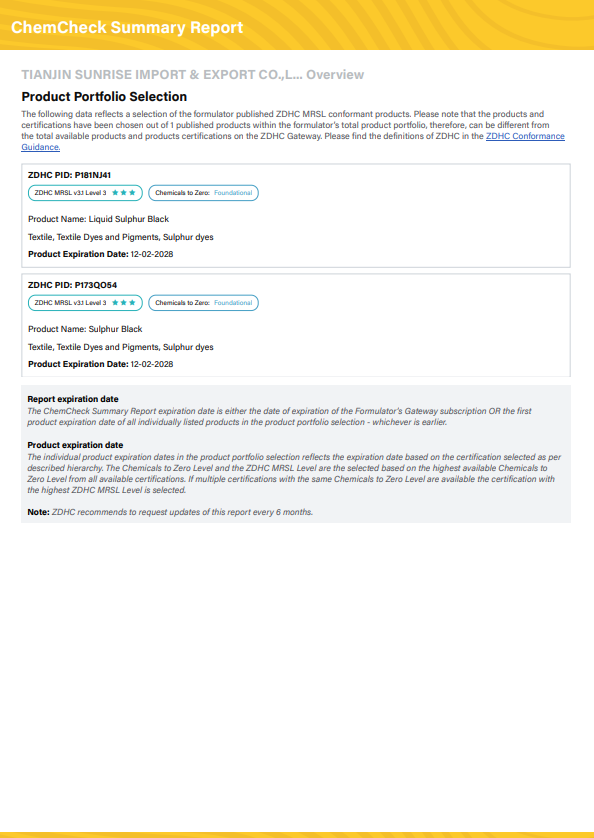
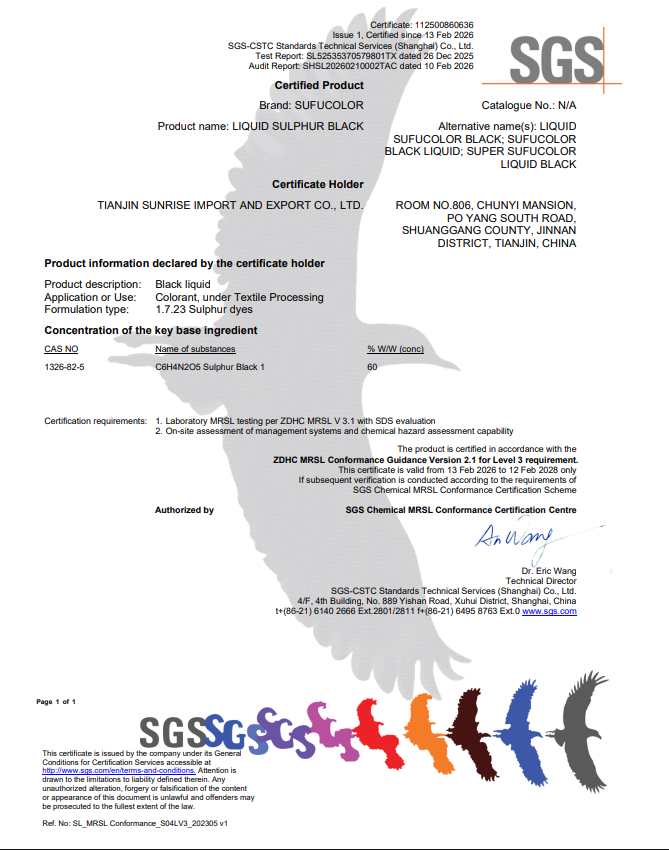
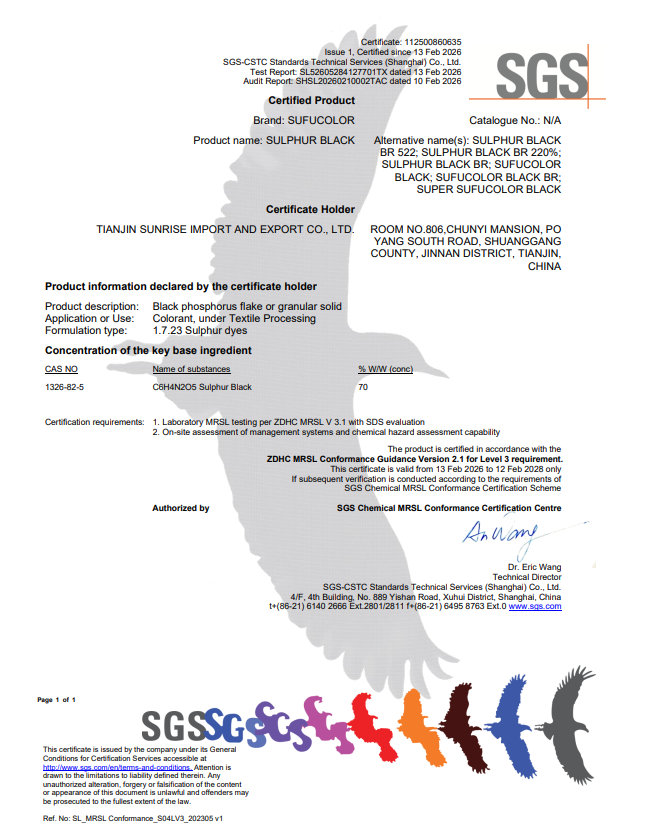
A cornerstone of our business strategy is our unwavering dedication to quality consistency and structural stability. Every single batch undergoes stringent chromatographic and spectrophotometric testing before shipment, ensuring absolute compliance with batch-to-batch variations. Our adherence to international ecological standards is validated by our ZDHC Level 3 and GOTS (Global Organic Textile Standard) Certifications, representing the highest tiers of safety assurance within the global supply network.
Environmental protection is integrated directly into our operational roadmap. We strive to provide commercial buyers with eco-efficient colorants that harmonize high yield and productivity with environmental preservation, supporting the industry's shift toward cleaner production methods and a sustainable future.
Our long-term partnerships with leading paper mills and textile dye houses are founded on technical compatibility. Over the years, Sunrise has engineered complex color matching algorithms and liquid dye injection schemes that adapt seamlessly to varying manufacturing setups. This technical alignment brings a multitude of operational advantages to our partners:
Our mission extends beyond pure chemical synthesis; we aim to act as a catalyst for our clients' profitability and compliance, driving down operational costs while facilitating smooth international customs clearances.
A look into the chemical characteristics, industrial synthesis pathways, and molecular composition of Bismark Brown G.
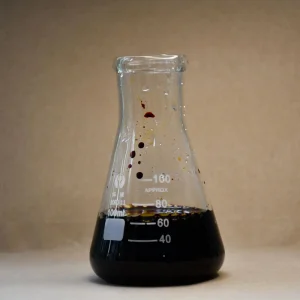
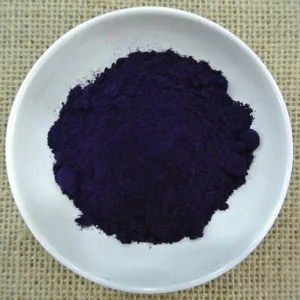
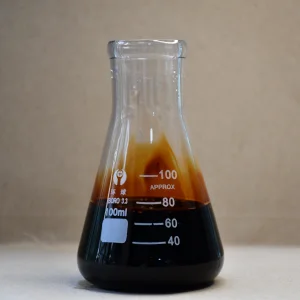
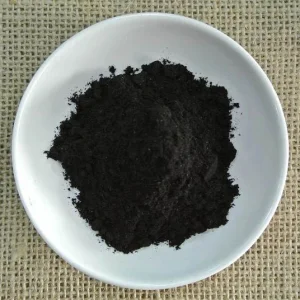
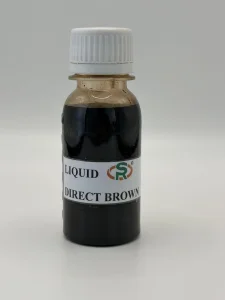
Bismark Brown G (commonly designated as Basic Brown 1, CAS Registry Number 10114-58-6) is a classic diazo dye characterized by its distinct yellowish-brown tint. It features a complex chemical structure formulated by the coupling of diazotized m-phenylenediamine with excess m-phenylenediamine. The resultant salt is highly water-soluble, making it highly effective for cellulose, wood-pulp, and acrylic dyeing applications.
| Chemical Property | Specification Detail / Value | Industrial Importance |
|---|---|---|
| Chemical Formula | C18H18N8 · 2HCl | Determines thermodynamic stability and reaction pathways. |
| Molecular Weight | 419.31 g/mol | Critical for accurate calculating of molar concentrations. |
| Colour Index Number | C.I. 21000 (Basic Brown 1) | Standard nomenclature used globally in international trade. |
| Water Solubility | ≥ 30 g/L (at 25°C) | Indicates feasibility for high-concentration liquid preparation. |
| pH Stability Range | 3.0 – 6.5 | Dictates suitability in acidic papermaking environments. |
| Heavy Metal Limits | Pb < 10ppm, As < 2ppm, Cd < 1ppm | Ensures compliance with ecological standards (ZDHC, REACH). |
Historically, the production of Bismark Brown G was accompanied by chemical waste and aniline byproducts. Modern manufacturing techniques implemented by advanced Chinese factories utilize automated temperature control systems to regulate the diazotization process at exactly 0-5°C. This micro-controlled reaction prevents secondary coupling pathways and minimizes the formation of undesirable isomers.
By implementing catalytic coupling agents and membrane filtration steps, Sunrise achieves a powder formulation with minimal salt levels, which translates to superior color yield and rapid solubility in industrial application baths.
How different manufacturing sectors apply Bismark Brown G to achieve high durability and cost efficiency.
Bismark Brown G is widely used in the paper and packaging industry for coloring unbleached kraft pulps, recycled paper boards, and corrugated paper. Its strong affinity for lignin ensures high retention rates without the need for complex mordants, resulting in lower wastewater chemical load.
Used in wood preservation formulations, wood stains, and furniture coatings. The dye penetrates deep into wood fibers, highlighting grain structures while providing resistance to heat and light when sealed with polyurethane topcoats.
In analytical and clinical settings, Bismark Brown G serves as a vital stain in cytology. It acts as a contrast agent in the Papanicolaou staining method, assisting in histological examinations and academic cell staining.
For acid-tanned and vegetable-tanned leathers, Basic Brown 1 delivers deep, level, and non-bronzing brown shades. It is frequently blended with black and orange dyes to yield custom earth tones for high-end automotive and fashion leather goods.
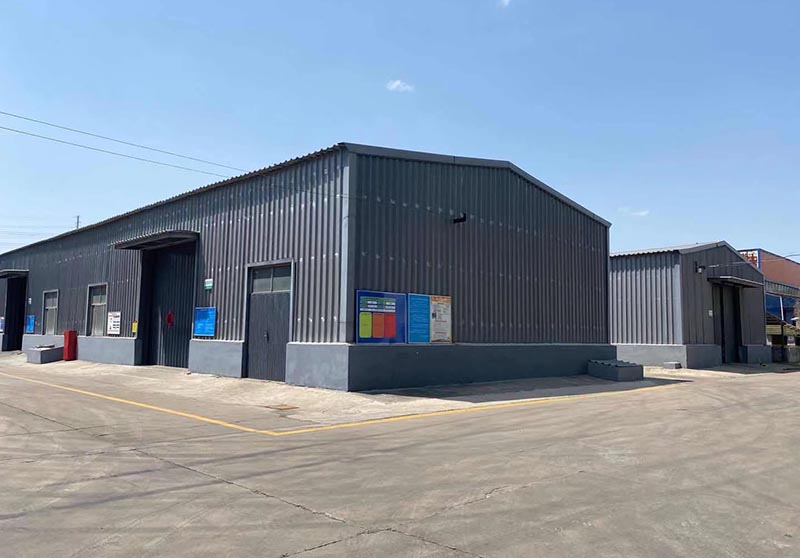
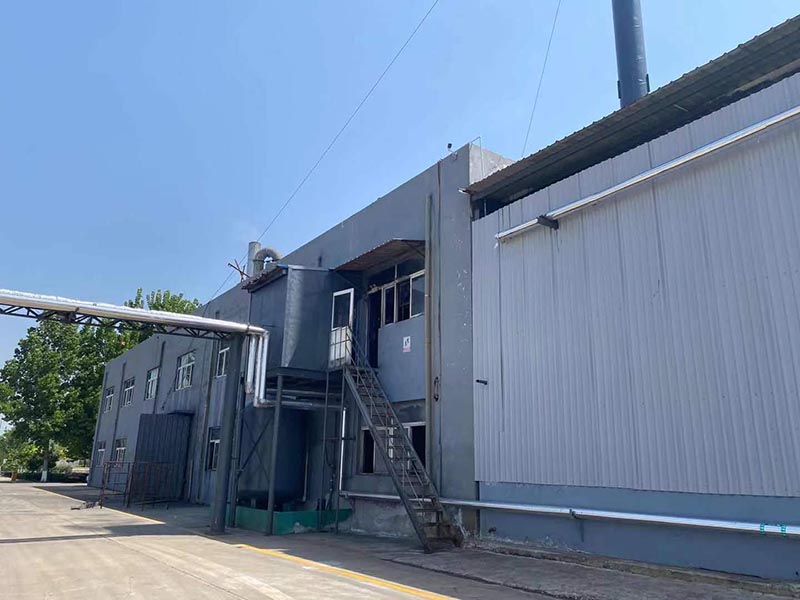
Our manufacturing facilities combine technological advancement and process automation to maintain output consistency.
The global chemical supply chain faces volatile raw material costs and shifting regulatory environments. Tianjin Sunrise Chem Group addresses these challenges through the integration of Industry 4.0 standards across our manufacturing facilities. By automating chemical feeds, temperature profiles, and crystallization stages, we reduce human error and optimize raw material utilization.
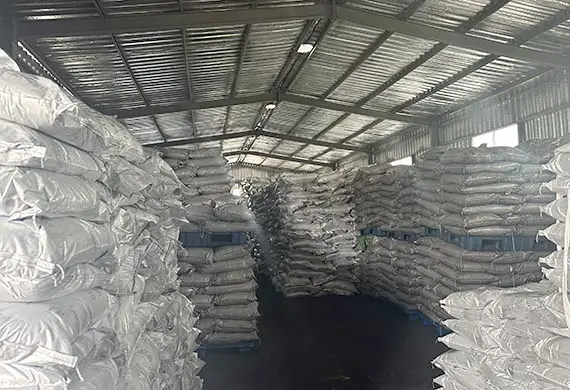
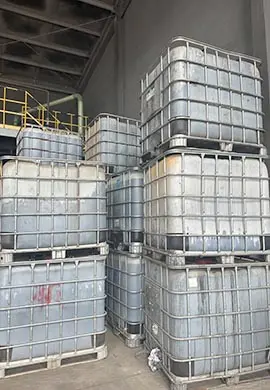
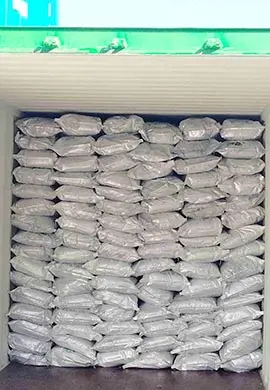
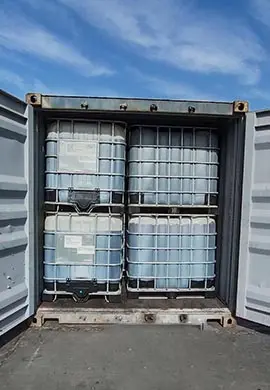
Furthermore, our production sites are located in close proximity to major ports (such as Tianjin Port), reducing domestic shipping times and ensuring prompt container dispatch. This geographic advantage, combined with raw material reserves, allows us to offer stable prices and reliable lead times even during global supply chain disruptions.
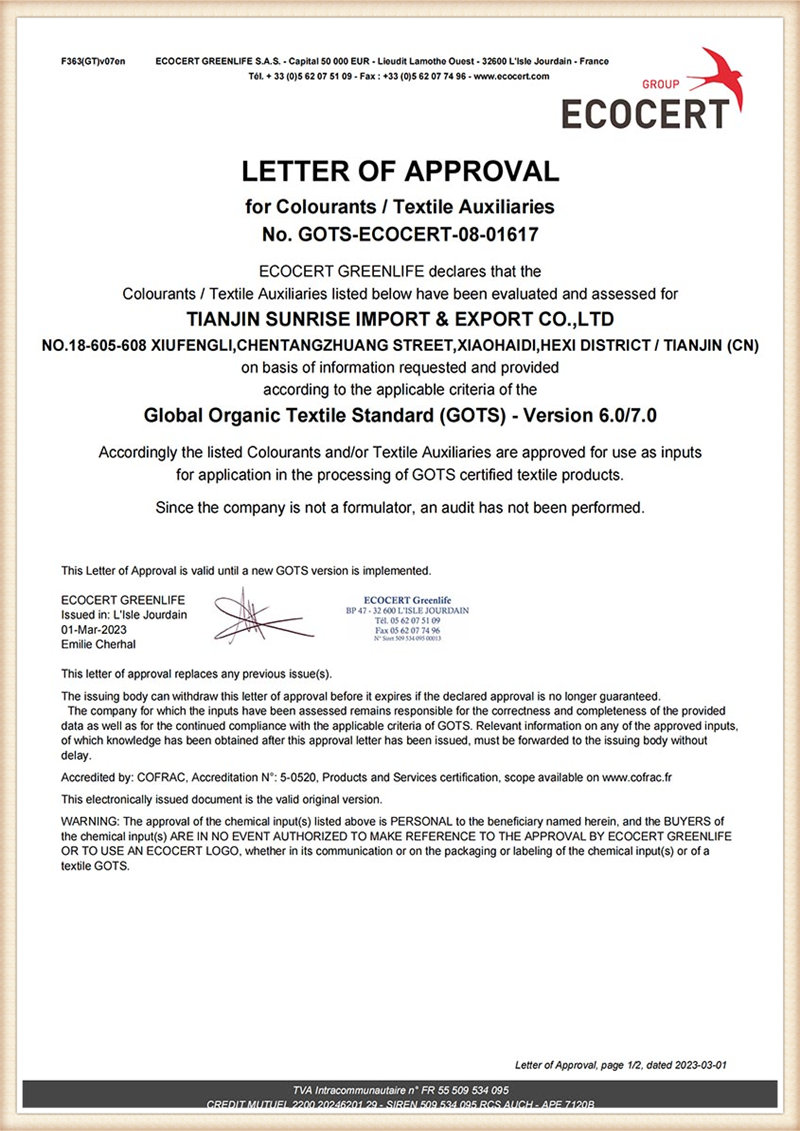
Our manufacturing processes are designed to meet international standards for chemical safety and environmental responsibility.
Sustainable sourcing requires rigorous verification at every stage of production. The Zero Discharge of Hazardous Chemicals (ZDHC) program works to prevent the release of hazardous substances into the environment. Achieving ZDHC Level 3 certification confirms that our chemical formulations, manufacturing processes, and wastewater treatments meet strict safety guidelines.
Similarly, the Global Organic Textile Standard (GOTS) ensures the organic status of textile products, from raw materials to environmentally and socially responsible manufacturing. By sourcing GOTS-certified dyestuffs from Tianjin Sunrise Chem, buyers can verify the environmental compliance of their supply chain.
Key considerations for international buyers sourcing Bismark Brown G from China.
When procuring Bismark Brown G (Basic Brown 1), procurement teams should evaluate the following parameters:

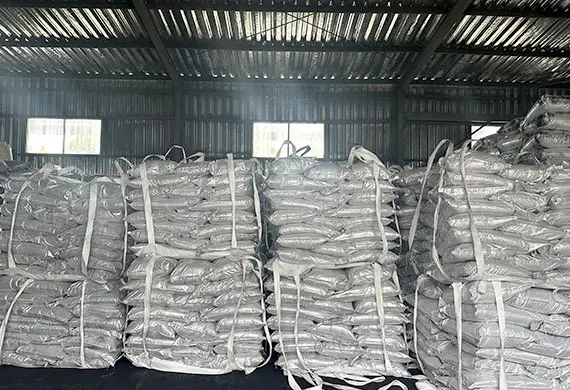
Answering common technical and commercial questions about Bismark Brown G procurement.
Our complete export range includes solvent dyes, organic pigments, optical brighteners, and cationic dyes.
 Sunrise