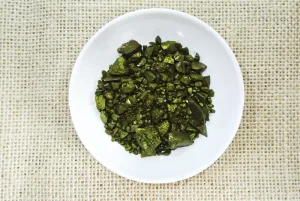
Explore our premium catalog of industrial dyes and specialized chemical solutions tailored to global standards.
Years Industrial Experience
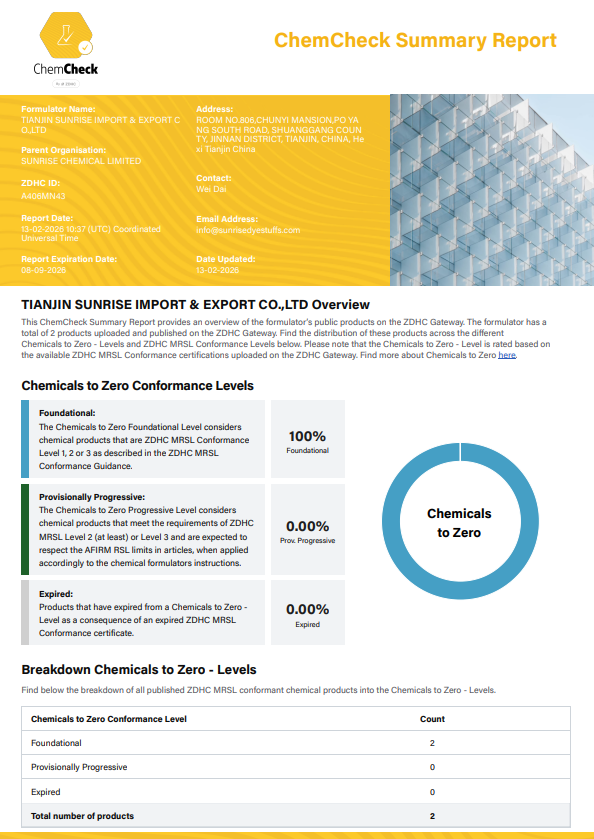
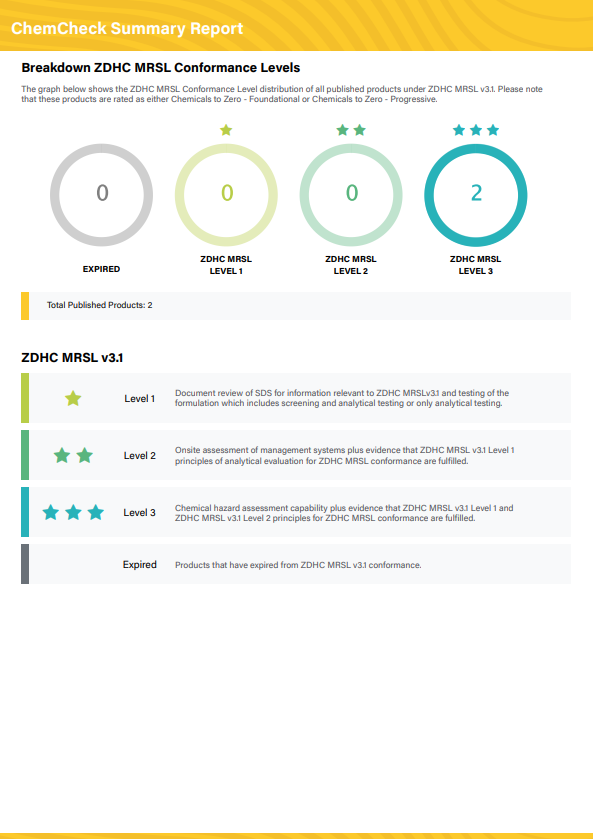
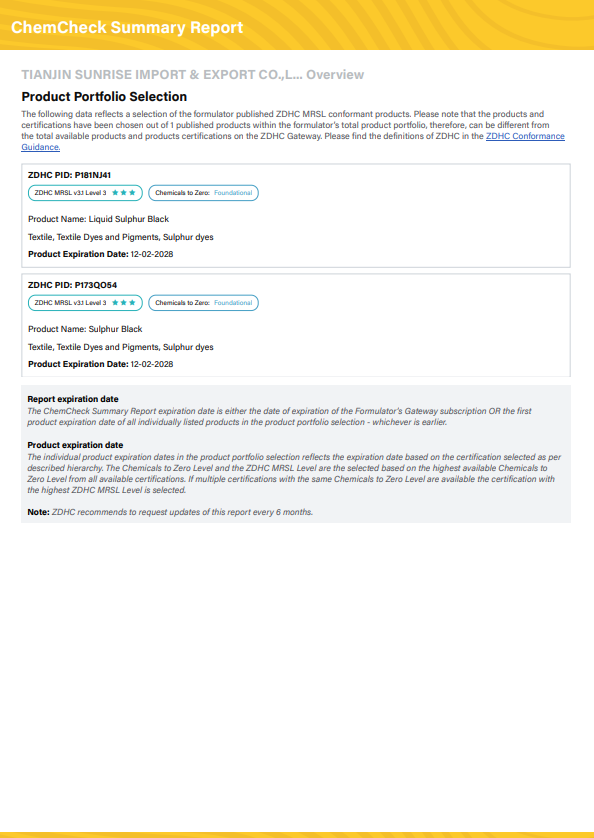
Zero Discharge Level 3 Certified
Countries Supplied Globally
Pre-Shipment Quality Testing
Tianjin Sunrise Chem Group specializes in manufacturing high-quality dyestuffs. Our extensive product portfolio includes Direct dyes, Acid dyes, Basic dyes, Sulphur dyes, Solvent dyes, Liquid dyes, and Fluorescent dyes. Backed by decades of industry and export experience, we have built a solid reputation for reliability and excellence, serving clients from diverse industrial sectors including denim production, textiles, leather tanning, paper mills, and plastic manufacturing.
We consistently maintain a rigid focus on goods quality and chemical stability. Every single batch shipment is systematically tested prior to dispatch to the port. Our certifications, including ZDHC Level 3 and GOTS (Global Organic Textile Standard), guarantee that our manufacturing practices conform to modern environmental and safety expectations.
We pride ourselves on offering tailored chemical formulations. Our technical team works alongside clients to identify specific requirements and develop customized products. We proactively build strategic business partnerships to broaden our international reach and optimize supply operations.
Unmatched tinting strength and high brilliancy on anionic substrates, backed by robust chemical manufacturing parameters.
Basic dyes (cationic dyes) deliver excellent coloring affinity on negatively charged (anionic) substrates. This makes them ideal for acrylic fibers, modified polyester, recycled wood pulp, and vegetable-tanned leather.
Cationic dyestuffs feature exceptionally high molar extinction coefficients. This chemical characteristic yields intense, vibrant hues with lower dye consumption compared to traditional direct or acid dyes.
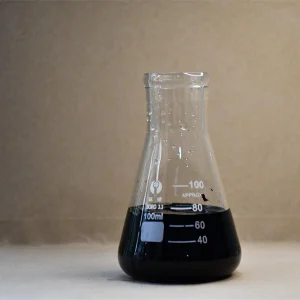
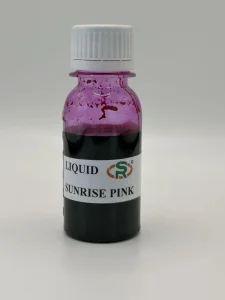
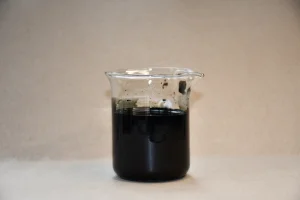
To eliminate hazardous airborne dust during color-kitchen formulation, we supply stable liquid basic dyes. These liquid forms offer uniform solubility and integrate smoothly into automated dosing systems.
Cationic or Basic Dye Colors are organic salts that dissociate in aqueous solutions into positively charged colored cations and negatively charged anions (often chloride, oxalate, or acetate). The cationic chromophore reacts strongly with acidic groups (such as sulfonic or carboxylic groups) present in the substrate, creating stable ionic bonds.
This chemical dynamic is particularly beneficial when dyeing polyacrylonitrile (acrylic) fibers, where acid sites are embedded in the polymer chain to anchor the dye molecules. The resulting color fastness to washing, perspiration, and general wear is outstanding, meeting strict performance standards for commercial textiles.
In the paper sector, the affinity of basic dyes for unbleached chemical pulp and mechanical wood pulp is remarkably high. This is because lignin contains phenolic hydroxyl and carboxyl groups that function as effective binding sites for cationic dyes.
| Dye Classification | Primary Substrates | Binding Mechanism | Key Strengths | Recommended Applications |
|---|---|---|---|---|
| Basic Dyes (Cationic) | Acrylic, Lignin-rich Paper, Silk, Leather | Ionic / Electrostatic Bonding | Brilliant shades, high exhaust rates | Kraft paper coloring, acrylic knits, leather shading |
| Direct Dyes (Anionic) | Cellulose (Cotton, Viscose), Bleached Paper | Hydrogen Bonding & Van der Waals forces | Easy application, good solubility | Writing papers, cotton textile fibers |
| Acid Dyes (Anionic) | Polyamide (Nylon), Wool, Silk, Leather | Salt linkage (ionic bonds in acidic media) | Bright colors, good light fastness | Wool apparel, carpet yarn, industrial inks |
| Sulphur Dyes (Insoluble) | Cellulose, Denim, Heavy Cottons | Mechanical entrapment after reduction/oxidation | Excellent wash/light fastness, cost-effective | Dark colors, denim warp yarns |
Aligning chemical manufacturing with modern environmental standards for international compliance.
The global chemical supply chain faces stringent environmental demands. Regulatory programs like ZDHC (Zero Discharge of Hazardous Chemicals) and GOTS (Global Organic Textile Standard) are essential for maintaining market access.
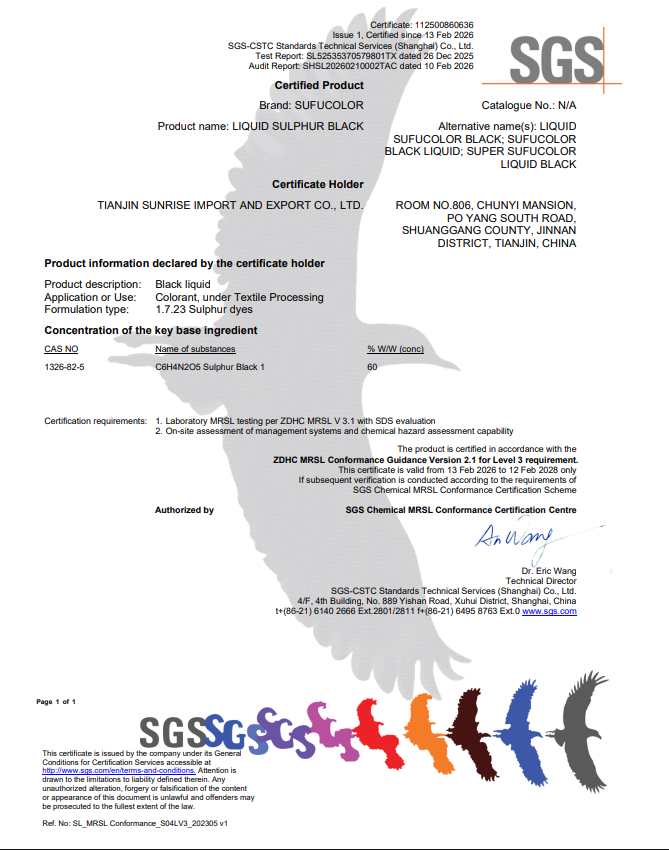
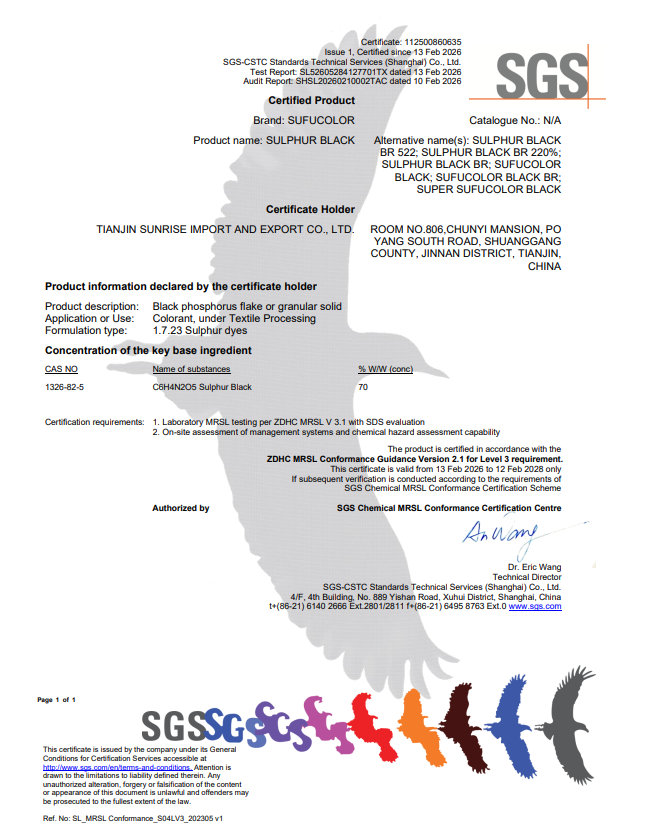
Achieving ZDHC Level 3 certification—the highest level in the program—verifies that our chemical products comply with the current Manufacturing Restricted Substances List (MRSL). It ensures that no banned raw materials are used during production, eliminating hazardous emissions throughout our operations.
Similarly, GOTS input approval certifies that our products meet strict criteria for organic textile processing. It verifies chemical safety, low toxicity, and environmental compatibility, allowing mills to confidently supply certified end-users.
By integrating these standards, Tianjin Sunrise Chem Group ensures that our customers remain compliant with global import regulations such as REACH (Europe) and TSCA (USA). Our environmental investments translate directly into reduced compliance risks for our purchasing partners.
From raw material selection to secure container loading: ensuring consistent batch quality.
We test intermediate chemicals for purity before synthesis to ensure the final product meets standard color coordinates.
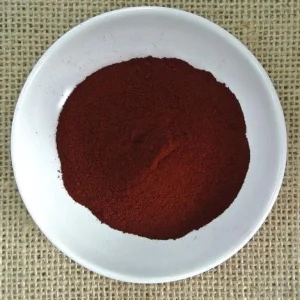
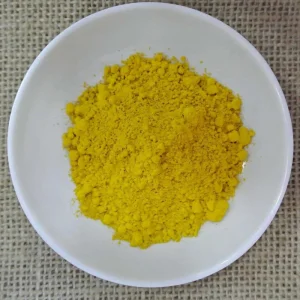
Our production facilities utilize modern reactors and filtration units to produce consistent dye powders and liquid formulations.
Every batch is checked via spectrophotometry to verify color strength (E-value) and shade matching against master standards.
Dyes are packed in moisture-resistant drums or IBC totes, followed by secure container loading for international transport.
High-performance applications of our acid, basic, direct, and solvent dyestuffs across global manufacturing projects.
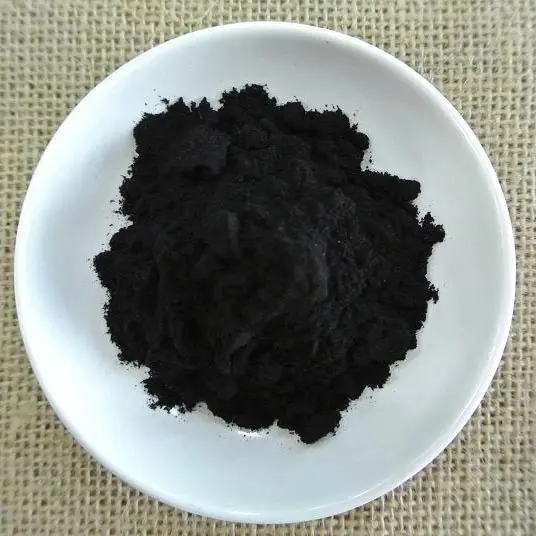
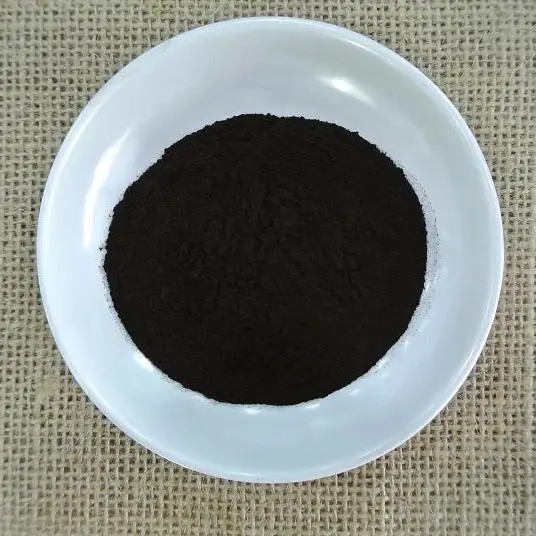
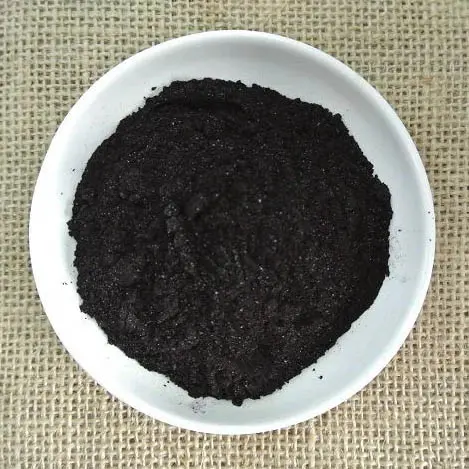
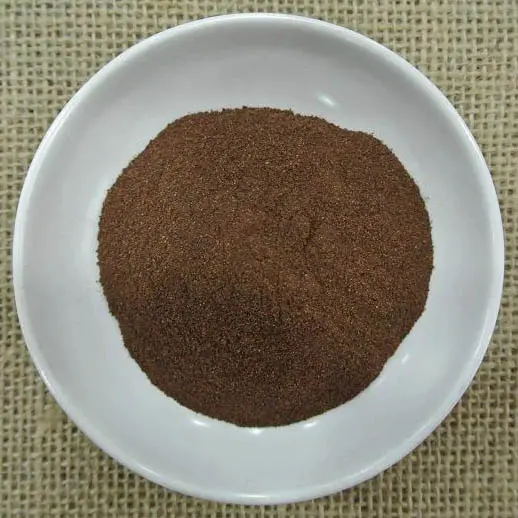
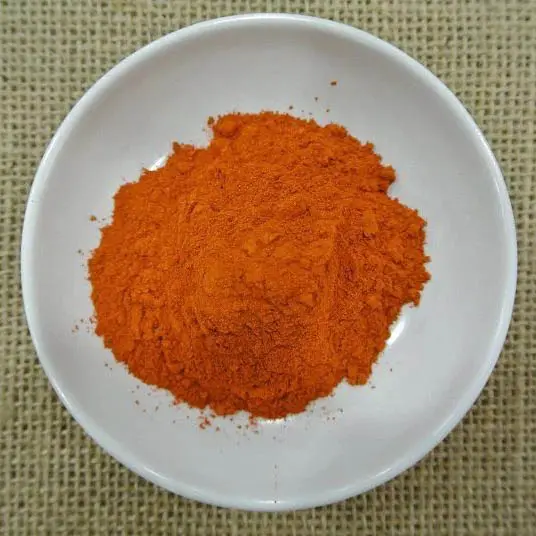
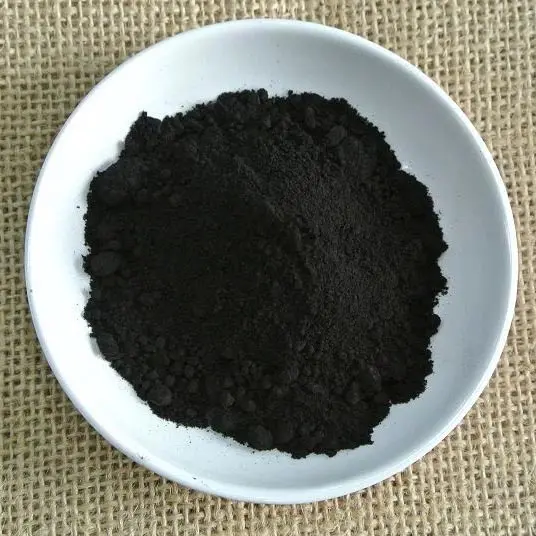
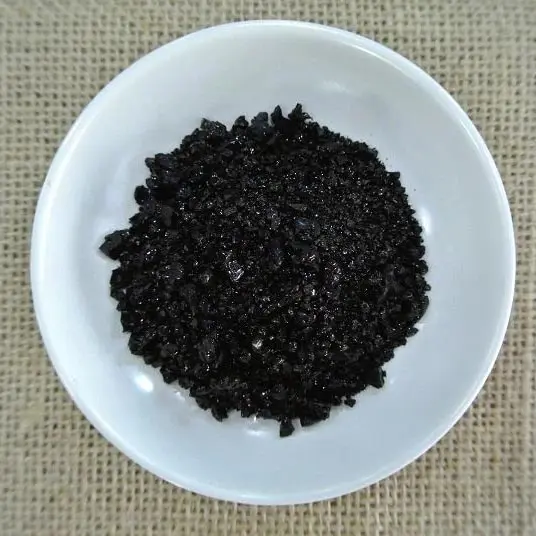
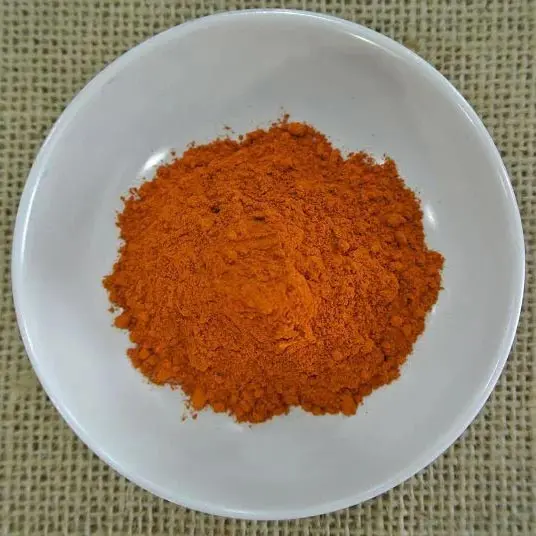
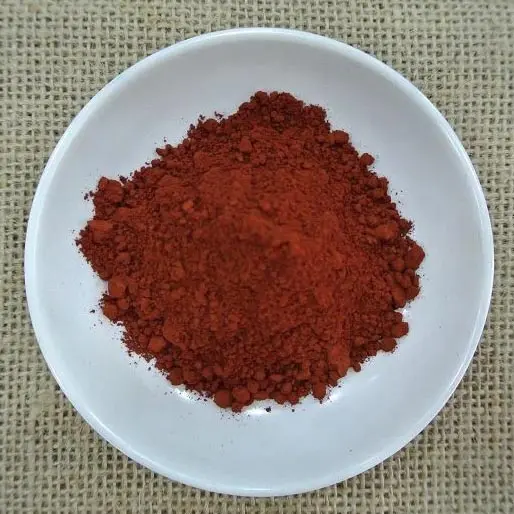
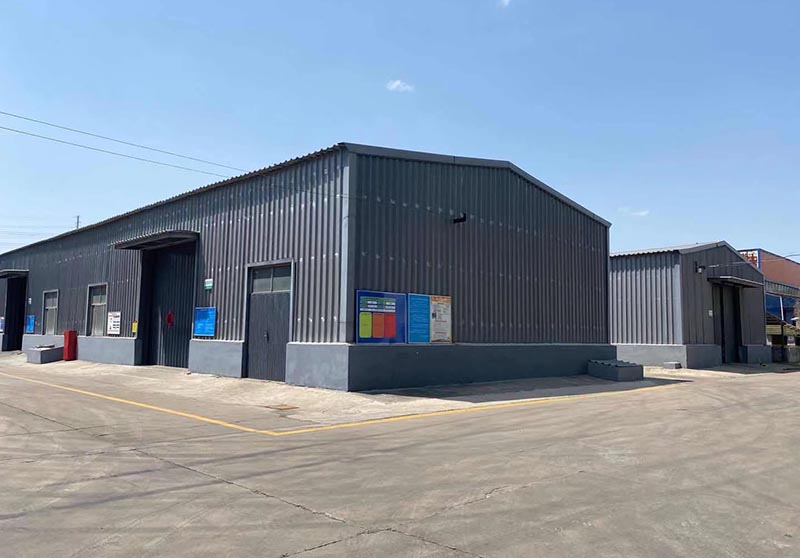
Strategic storage reserves, automated packaging lines, and ocean shipping setups.
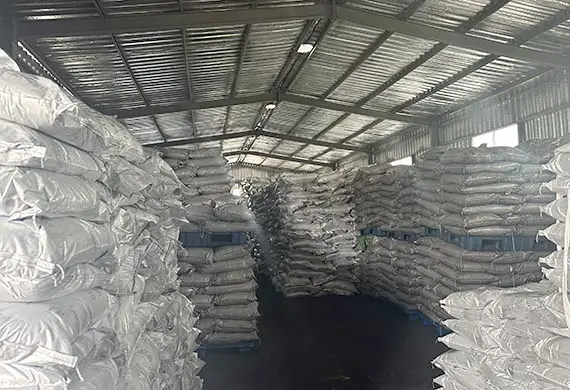
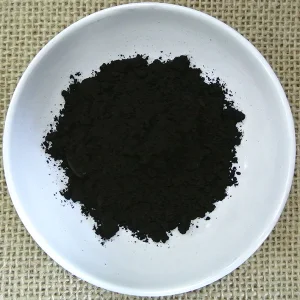
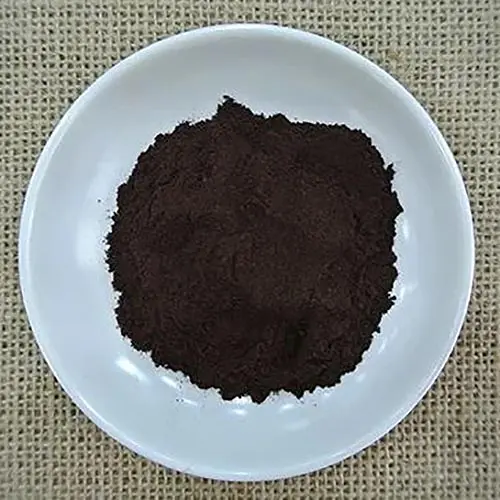
We maintain a high-volume warehouse inventory of Sulphur Black to ensure consistent supply and cover surge requirements during peak manufacturing seasons.
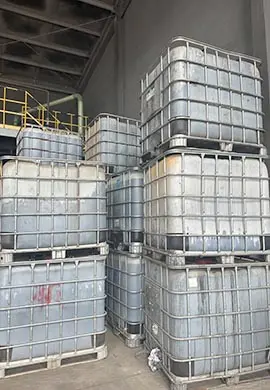
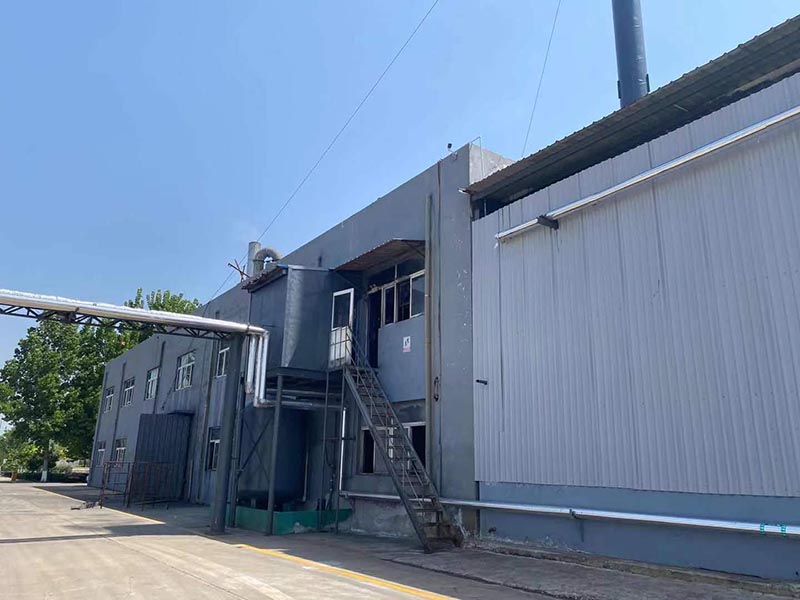
Our dedicated liquid dyestuff facility processes, filters, and standardizes highly soluble liquid colorants for dust-free applications.
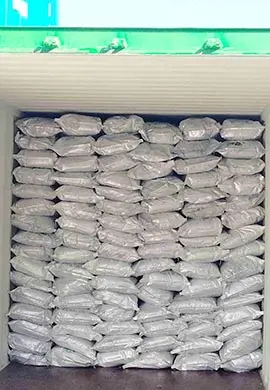
We manage logistics and secure containers carefully to ensure shipments arrive intact and dry, preventing moisture damage during transit.
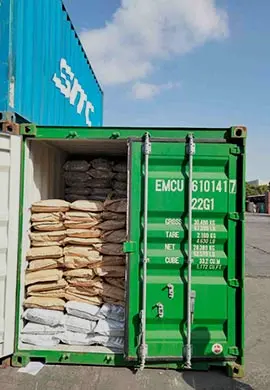
Shipments of direct dyes are palletized, shrink-wrapped, and loaded securely to optimize transit space and ensure safe delivery.
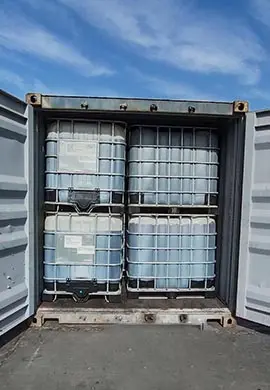
Liquid shipments are packed in heavy-duty IBC totes and securely braced inside containers to prevent movement during ocean transit.
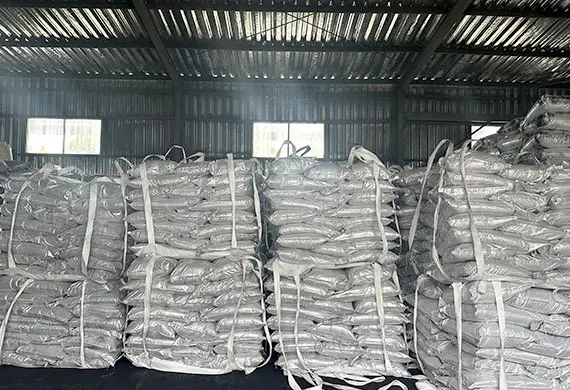
Through our established shipping partnerships, we coordinate dispatch processes from major Chinese ports directly to customer facilities globally.
Cooperating with textile and paper mills over the long term allows us to establish highly integrated business relationships. This cooperative approach supports steady production planning, shared technical feedback, and continuous product improvement. It also reflects our long-term track record of delivering quality products that meet our partners' processing requirements.
Our core mission is to support client business growth by providing reliable, customized colorant formulations. We aim to contribute to our customers' success by delivering consistent products and supportive technical service. By building reliable partnerships, we strive to be a dependable resource for our clients' production operations.
With years of export history, we have established stable partnerships across multiple countries. Our commitment to meeting international regulatory standards and technical demands has helped build our reputation as a reliable global supplier.
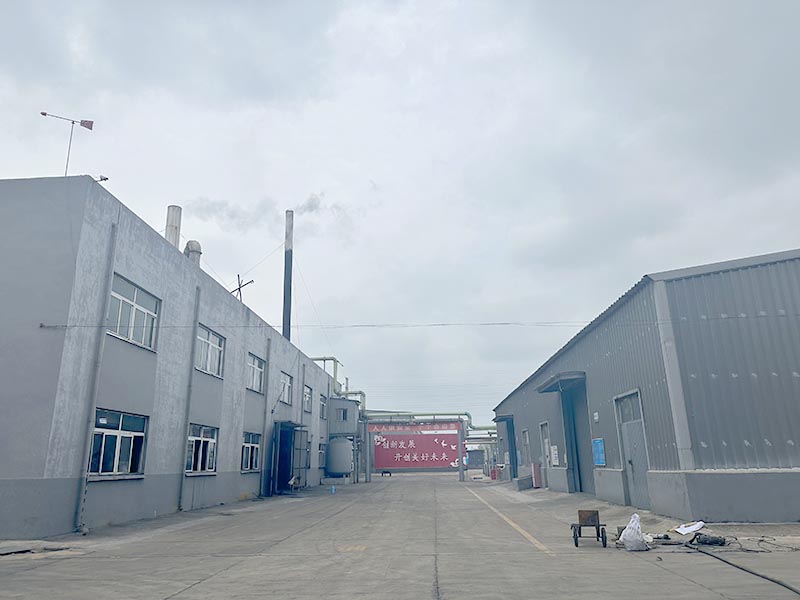
Leveraging localized raw material supply, scale efficiencies, and deep logistics integration.
Our proximity to essential chemical raw materials (including aniline and aromatic derivatives) isolates production from external supply shocks and maintains stable base pricing.
With high-capacity reaction vessels and automated standardization lines, we reliably process bulk volume orders even during times of tight raw material supply.
Our proximity to major northern ports, such as Tianjin, enables efficient domestic shipping, container consolidation, and rapid international transit.
Expert insights addressing common technical, regulatory, and application inquiries from chemical engineers and sourcing specialists.
The difference lies in their ionic charge. Basic dyes are cationic, meaning they dissociate in water to produce a positively charged colored ion. These ions form electrovalent bonds with negatively charged (anionic) groups on fibers like acrylics, unbleached pulp, or leather. Acid dyes, in contrast, are anionic (negatively charged) and bond with positively charged sites on protein fibers (such as wool, silk, or polyamide) under acidic conditions.
Basic dyes feature conjugated chromophore structures with highly localized positive charges. This molecular configuration yields high molar extinction coefficients, enabling them to absorb and reflect light efficiently. This results in vibrant color shades that are difficult to replicate with direct or acid dyes.
ZDHC Level 3 certification verifies that our formulations are verified as compliant with the ZDHC MRSL. This third-party audit ensures that raw material streams, chemical syntheses, and final formulations do not contain prohibited hazardous substances. It helps buyers avoid costly product recalls, ensure compliance with regional import requirements (like REACH), and minimize wastewater treatment challenges.
Directly, they have low affinity because bleaching removes lignin, which contains the sulfonic and carboxylic acid groups required for bonding. In these cases, direct dyes are typically preferred. However, basic dyes can still be used on bleached pulps if a chemical mordant or anionic fixing agent is applied first to bridge the fiber and the cationic dye.
Liquid basic dyes should be stored in cool, dry, well-ventilated areas away from direct sunlight, with temperatures maintained between 5°C and 30°C. Storing them below freezing can cause crystallization, while excessive heat can lead to chemical degradation or separation. Keeping containers tightly sealed helps prevent evaporation and skinning.
Because basic dyes exhibit strong affinity and fast exhaust rates, they can easily cause uneven coloration if not managed. Adjusting the pH to a slightly acidic range (typically 4.5 to 5.5 using acetic acid) helps control the rate of ionization and dye uptake. Adding a cationic leveling agent can also help slow the exhaustion rate, ensuring a more uniform finish.
Technical colorants formulated for industrial applications, paper mills, and global export markets.
 Sunrise