Why Choose Liquid Paper Dyes for Paper Manufacturing?

Time:2026-10-25 Author:Aria
0%

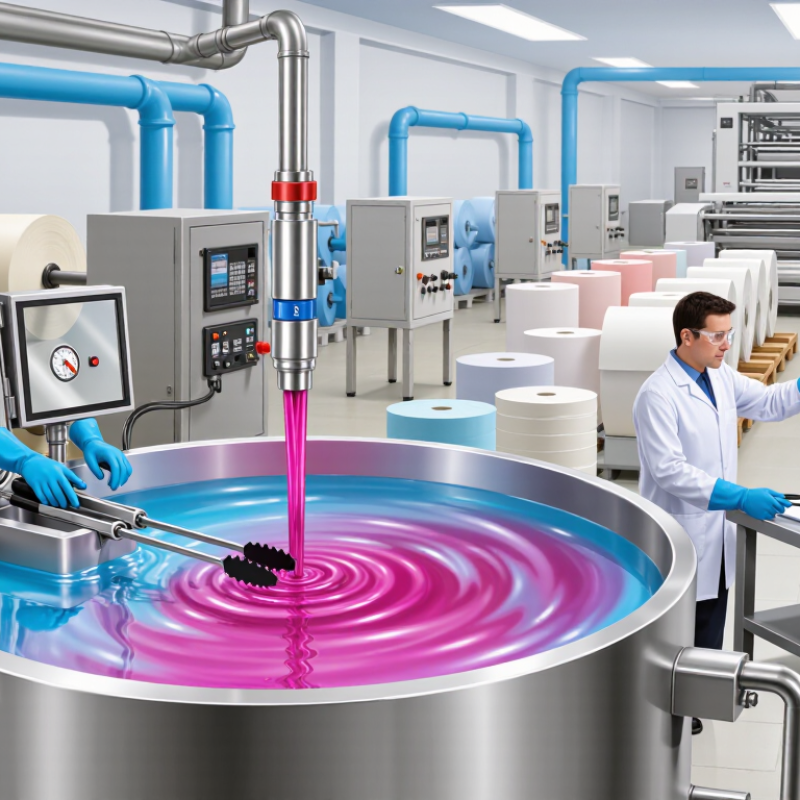
Choosing the right colorant can influence paper quality, production efficiency, and customer satisfaction. Why Choose Liquid Paper Dyes for Paper Manufacturing? The answer begins with practical control. Liquid dyes disperse quickly in process water and can reduce the dusty handling associated with dry powders. This matters beside a busy mixing tank, where clean dosing supports safer and more consistent work.

Paper Dyes Liquid products can help manufacturers achieve uniform shades across writing paper, packaging grades, tissue, and specialty sheets. Operators can adjust dosage through calibrated pumps, then compare a wet sample with a dried sheet under controlled lighting. This simple check often reveals small color shifts before a full production run. Liquid formulations may also shorten preparation time because they require less pre-dissolving. However, performance depends on fiber type, water chemistry, pH, temperature, and machine speed. No dye works perfectly in every mill.

Experienced technical teams usually begin with laboratory trials. They review the supplier’s technical data, test compatibility with sizing agents, and measure shade strength, migration, and fastness. Production records should include batch number, dosage, pH, and final color readings. These details support traceability and repeatable quality control. Independent testing can provide additional confidence when paper will contact sensitive applications or face demanding storage conditions.

The choice is not always obvious. A lower purchase price may hide higher dosing or cleaning costs. Some shades may need adjustment after drying. That is normal, but it deserves attention. By combining verified supplier guidance, controlled trials, and operator experience, manufacturers can judge whether liquid paper dyes deliver reliable value for their specific process.
Why Choose Liquid Paper Dyes for Paper Manufacturing?

Define Liquid Paper Dyes: Water-Based Colorants at 0.01–0.5% Dosage

Why Choose Liquid Paper Dyes for Paper Manufacturing?
Define Liquid Paper Dyes: Water-Based Colorants at 0.01–0.5% Dosage

Liquid paper dyes are water-based colorants designed to tint paper fibers during manufacturing. They are usually added at 0.01–0.5% based on dry fiber weight. This low dosage can create noticeable shades without heavily changing the furnish. In practice, operators dilute the dye before metering it into the pulp stream. Even mixing matters. A weak dilution can leave pale streaks across the sheet.

Color selection depends on fiber type, pH, temperature, and retention conditions. Recycled fiber may absorb color differently from bleached virgin pulp. Small laboratory trials help reveal these differences before production begins. Check the shade under standard lighting. Wet paper can look darker than the finished sheet. That surprises people.

Process control should include dosage records, mixing time, and sample testing. A calibrated pump improves repeatability, but it cannot correct poor dispersion. The first trial may disappoint. That is useful information, not failure. Adjust one variable at a time, such as dosage or dilution water. Excess colorant may increase wastewater color and create unwanted shade variation. Operators should also review compatibility with sizing agents, fillers, and retention chemicals. Reliable results come from documented testing, clear safety procedures, and realistic expectations about each paper grade.

Classify Dye Types by Charge, Solubility, and Compatibility with Paper Fibers

Why Choose Liquid Paper Dyes for Paper Manufacturing?

Liquid paper dyes offer practical control during paper manufacturing. Their performance depends on charge, solubility, and fiber compatibility. These details matter more than color strength alone.

Cationic dyes carry a positive charge and often bond well with negatively charged cellulose fibers. They can produce strong shades with relatively low dosage. Anionic dyes carry a negative charge and may need retention aids for better fixation. Nonionic dyes provide useful stability when ionic conditions change. Solubility also guides selection. Water-soluble dyes disperse quickly in mixing tanks, while limited-solubility products may create specks or uneven shade. I have seen a pale blue sheet develop darker edges after poor circulation. The dye was suitable, but the process was not.

Tips: Check the dye charge against fiber chemistry, filler levels, and process water. Test solubility in actual white water, not only clean laboratory water. Stir a small sample for ten minutes and inspect it under strong light. Compatibility is equally important. A dye should remain stable beside sizing agents, optical brighteners, and retention chemicals. Some combinations look acceptable at room temperature but shift shade during drying. That weakness deserves attention. No classification is perfect, either. A controlled mill trial should confirm fixation, shade uniformity, wastewater appearance, and storage stability before regular production.

Why Choose Liquid Paper Dyes for Paper Manufacturing? - Classify Dye Types by Charge, Solubility, and Compatibility with Paper Fibers

Dye Type Typical Ionic Charge in Water Water Solubility Main Affinity for Paper Fibers Typical Process Conditions Best-Fit Paper Applications Relative Fastness Profile Compatibility Considerations
Basic / Cationic Dyes Cationic (+) Generally high in water; supplied as salts Strong attraction to anionic sites on cellulose, especially when fibers contain anionic additives or are cationically modified Usually mildly acidic to neutral; good dispersion and controlled addition are important Bright shades, tissue, decorative grades, colored specialty papers, and high-yield fiber systems Very bright and strong color; light and wet fastness vary and may be moderate May be retained rapidly by anionic furnish components; excessive dosage can cause uneven formation or shade variation
Direct Dyes Anionic (−), commonly with sulfonate groups Usually water-soluble; solubility depends on molecular structure and electrolyte level Substantive attraction to cellulose through hydrogen bonding, van der Waals forces, and molecular alignment Often used in neutral to mildly alkaline systems; salt and retention chemistry influence uptake General colored papers, packaging papers, writing grades, and economical high-volume production Generally good shade build-up; wet fastness is often limited unless after-treatment is used Can compete with anionic retention aids and fillers; cationic retention systems may improve fixation
Acid Dyes Anionic (−) High water solubility is common, particularly for sulfonated grades Limited direct affinity for untreated cellulose; improved retention may require cationic polymers, alum, or other fixing chemistry Typically acidic to mildly acidic; pH control affects shade and retention Very bright shades, tissue, coated papers, and applications where liquid-phase color adjustment is needed Often bright; wet and migration fastness depend strongly on fixation and coating structure Poor retention can increase color loss in white water; test interaction with sizing agents and cationic additives
Reactive Dyes Anionic (−) before fixation; reactive groups form covalent bonds under suitable conditions Water-soluble before fixation Can chemically bond with cellulose hydroxyl groups when the required reactive chemistry is available Usually requires controlled alkaline conditions, sufficient contact time, and removal or neutralization of hydrolyzed dye Specialty papers requiring improved wash or wet resistance and selected cellulose-based products Potentially strong wet fastness after fixation; unfixed or hydrolyzed dye can bleed Less common for simple wet-end dosing because process control is demanding; alkalinity may affect sizing and retention chemistry
Solvent Dyes Typically nonionic Soluble in selected organic solvents; generally insoluble or only slightly soluble in water Little natural affinity for hydrophilic cellulose fibers; more suitable for hydrophobic phases, resins, waxes, or coatings Requires a compatible solvent or carrier; solvent safety, emissions, and drying must be evaluated Specialty coating formulations and nonaqueous paper treatments rather than conventional aqueous wet-end systems Can provide good transparency and migration resistance in compatible coatings; performance is formulation-dependent Generally unsuitable for direct addition to water-based pulp without emulsification or a suitable carrier
Pigment Dispersions Particles are generally nonionic or surface-charged; not molecularly dissolved Insoluble in water; supplied as stabilized aqueous dispersions Held on or within the fiber web by binders, retention polymers, and mechanical entrapment rather than true fiber dissolution Requires dispersion stability, shear control, and compatible binder or retention chemistry Coated papers, board, packaging, decorative papers, and applications requiring strong opacity or light fastness Often better light and migration fastness than many soluble dyes; rub and wet resistance depend on binder quality May increase deposits or affect drainage if poorly stabilized; particle size and compatibility with fillers are critical
Fluorescent Brightening Agents Usually anionic (−) Generally water-soluble or supplied as aqueous dispersions Adsorb onto cellulose and coatings; absorb ultraviolet light and emit blue-violet visible light to increase perceived whiteness Usually neutral to mildly alkaline; dosage and fiber brightness must be controlled to avoid fluorescence saturation White printing papers, office papers, coated grades, and high-brightness packaging papers Improves optical brightness but is not a conventional shade dye; performance can decline with light exposure and chemical aging Can be affected by anionic fillers, cationic fixatives, and ultraviolet exposure; evaluate brightness under standardized illumination

Note: Actual charge, solubility, retention, and fastness depend on the dye’s molecular structure, formulation, pulp composition, pH, electrolyte concentration, fillers, sizing agents, and retention system. Pilot testing is recommended before selecting a liquid paper dye for production.

Compare Stock, Size-Press, and Coating Applications for Shade Uniformity

Liquid dyes are gaining attention because shade control begins with where color enters the paper system. FAO’s Forestry Production and Trade data places global paper and paperboard production above 400 million tonnes annually. At this scale, small dosing errors can create visible variation across reels. Liquid dyes dissolve quickly and can support cleaner metering than poorly dispersed solid colorants. Yet performance depends on water quality, furnish changes, retention, and machine speed.

Stock addition gives color throughout the sheet. It usually offers the strongest protection against surface wear and two-sided shade differences. However, fiber retention can shift during production. Size-press application places dye near the surface and uses less color than full-stock tinting. It can improve brightness adjustment, but uneven pickup may appear near reel edges or during start-up. Coating application gives the sharpest surface effect. It suits premium grades, though coating streaks, drying temperature, and blade pressure can disturb uniformity.

CEPI’s Preliminary Statistics 2023 reported European paper and board production at about 79.5 million tonnes. That volume highlights why repeatable shade measurement matters. Mills commonly verify color using calibrated spectrophotometers and CIE L*a*b* values, not visual inspection alone. ISO 2470-1 also supports standardized brightness measurement under controlled conditions. Real production is less tidy. A laboratory match may fail after furnish changes. Operators should test across the sheet, not only at the center. Small flaws remain possible. That is where process records, frequent sampling, and cautious dye adjustments become valuable.

Why Choose Liquid Paper Dyes for Paper Manufacturing?

Comparison of stock, size-press, and coating applications using shade-uniformity indicators. Lower ΔE00 values represent smaller color variation and more consistent shade development.

Liquid dyes can be metered accurately and dispersed rapidly in water-based systems. Stock addition generally supports whole-sheet coloration, size-press application enables efficient surface shade adjustment, and coating application provides the most localized control for coated grades. The values shown represent practical comparative process indicators rather than a specification for a particular machine or furnish.

Measure Performance with ISO 2470 Brightness, TAPPI T 452, and ΔE

Liquid paper dyes help manufacturers control shade, brightness, and visual consistency during paper production. The key question is not whether paper looks white under one light. It is whether whiteness remains measurable across batches and viewing conditions. ISO 2470 brightness provides a standardized value for blue-light reflectance. TAPPI T 452 offers another recognized method for evaluating brightness. Using both tests can reveal differences caused by instruments, preparation, or process settings. These measurements support more reliable dye adjustments.

Tips: Test representative sheets, not only the first sample. Condition specimens before measurement. Record dye dosage, pulp composition, moisture, and machine speed. Measure several points across each sheet. Then compare the average and variation. A single reading can mislead.

ΔE adds a practical color perspective. It shows how far a sample differs from a target shade. A low ΔE usually indicates closer visual matching, but lighting still matters. Operators should inspect samples under controlled light after instrumental testing. I have seen acceptable brightness values paired with noticeable shade shifts. That result deserves investigation, not immediate approval. One limitation is that ΔE depends on the selected color system and measurement conditions. Clear procedures, calibrated instruments, and trained technicians make the data more trustworthy. Some process records remain incomplete; improving them can prevent repeated errors.

Evaluate Value Across 400+ Million Tonnes of Annual Global Paper Output

Why Choose Liquid Paper Dyes for Paper Manufacturing?

Global paper production exceeds 400 million tonnes each year. FAO’s Forestry Production and Trade database reported about 417 million tonnes of paper and paperboard output in 2022. At this scale, small dosing errors can create costly shade variation. Liquid paper dyes support accurate metering, faster dispersion, and smoother colour adjustment during production. These benefits matter on high-speed machines handling recycled and virgin fibres. They can also reduce powder handling and improve workplace cleanliness. However, performance depends on water chemistry, fibre furnish, retention, and machine speed. No dye performs perfectly everywhere.

A practical evaluation should measure colour strength, dosage, retention, brightness, and wastewater load. The ISO 2470 brightness method helps compare optical results consistently. The TAPPI T 452 method is also widely used for brightness testing. CEPI reported European paper and board production near 80 million tonnes in 2023, showing the scale of modern manufacturing pressure. Liquid dyes may lower storage losses and simplify automated dosing, but the financial result must come from mill data. A cheaper product can create higher costs through broke, rework, or shade complaints. This is easy to overlook.

Tips: Run controlled trials on actual furnish. Record colour difference, dosage, and effluent readings. Check results across several shifts, not one sample. Review the findings with operators and quality staff. Some assumptions will be wrong. That is useful.

FAQS

Why are liquid dyes used in paper manufacturing?

They dissolve quickly and support accurate metering. This can reduce visible shade variation across large reels. No dye performs perfectly everywhere.

What is the main advantage of stock addition?

Stock addition colors the sheet throughout its thickness. It usually protects against surface wear and two-sided shade differences. Retention may still shift.

When is size-press application useful?

Size-press application places color near the surface and often uses less dye. It can adjust brightness efficiently. Uneven pickup may appear near reel edges.

What does coating application offer?

Coating creates the sharpest surface effect. It suits premium grades requiring strong visual uniformity. Streaks, drying temperature, and blade pressure can disturb results.

How should mills check shade uniformity?

Use a calibrated spectrophotometer and CIE Lab measurements. Test across the sheet, not only at the center. Visual checks alone are insufficient.

Which production factors can change dye performance?

Water chemistry, fibre furnish, retention, and machine speed all matter. Recycled and virgin fibres may behave differently. Small dosing errors remain important.

Can liquid dyes reduce manufacturing costs?

They may simplify automated dosing, reduce powder handling, and lower storage losses. Savings must come from mill data. Rework and shade complaints can erase them.

How should a practical dye trial be designed?

Run controlled trials using the actual furnish. Record dosage, colour difference, brightness, and effluent readings. Check several shifts. One sample can mislead.

Can a laboratory colour match fail during production?

Yes. Furnish changes or altered retention can shift the final shade. The result may look acceptable in the laboratory but uneven on a reel. This deserves review.

What common mistake should operators avoid?

Avoid judging uniformity from one sheet location or one production shift. Inspect reel edges, the center, and start-up material. Some assumptions will be wrong.

Conclusion

Liquid paper dyes are water-based colorants designed to deliver consistent, efficient coloration in paper manufacturing, typically at dosages ranging from 0.01% to 0.5%. Their selection depends on factors such as electrical charge, solubility, fiber affinity, and compatibility with the paper furnish. Understanding these properties helps manufacturers achieve stable shades while minimizing colorant use and process variation.

Paper Dyes Liquid can be introduced through stock addition, the size press, or coating systems, with each method offering different benefits for shade uniformity, surface appearance, and process control. Performance should be evaluated using recognized measurements, including ISO 2470 brightness, TAPPI T 452 optical properties, and ΔE color difference values. By comparing color strength, retention, reproducibility, and overall cost, producers can identify solutions that create value across the more than 400 million tonnes of paper manufactured globally each year.


Aria

Aria

Aria is a dedicated marketing professional with a deep passion for innovative strategies and a keen understanding of our company's product offerings. With a wealth of experience in the industry, Aria excels at crafting engaging content that highlights the unique features and benefits of our......