Choosing the right Direct Dyes Color supplier is more complex than comparing shade cards or quoted prices. A reliable supplier must deliver consistent color, stable solubility, accurate documentation, and dependable batch performance. These details matter when a dye moves from a laboratory beaker to meters of cotton fabric.
Dr. Richard M. Christie, a recognized color chemistry scholar, has offered a useful perspective: “Colour is a visual sensation, not simply a chemical label.” His observation explains why supplier evaluation cannot stop at chemical names. Application testing remains essential. Buyers should examine shade reproducibility, exhaustion behavior, wash fastness, storage stability, and technical support. A supplier may provide a bright blue sample, yet the same shade can shift during production. That is where practical experience becomes valuable.
The leading Direct Dyes Color suppliers usually combine manufacturing capacity with quality control and application knowledge. They can provide technical data sheets, safety documentation, test reports, and clear guidance for different fiber types. Their laboratories should compare samples under controlled light, water conditions, and fabric weights. Small differences become visible quickly.
Price still matters.
However, the cheapest quotation may hide inconsistent strength, longer lead times, or costly rework. Environmental responsibility also deserves attention, including wastewater guidance, restricted-substance compliance, and transparent sourcing records. No supplier performs perfectly in every market. Even experienced buyers can overlook packaging moisture or seasonal shipping delays. This guide examines major suppliers through practical criteria, not promotional claims, helping readers identify partners that are technically capable, transparent, and dependable.
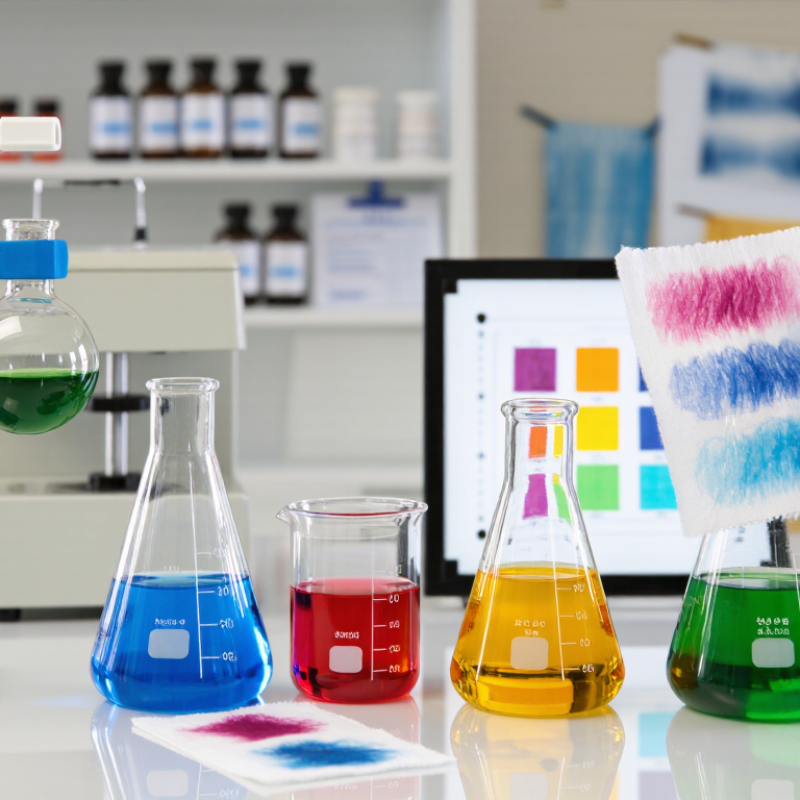
What Are the Top Direct Dyes Color Suppliers?
Direct dyes are water-soluble colorants designed mainly for cellulose fibers. They work without a separate mordant or fiber-reactive chemical reaction. Their large molecular structures attach to cotton through hydrogen bonding and other physical forces. This process makes production relatively simple.
Direct dyes offer broad shades, easy application, and useful color depth. They are commonly used for cotton fabric, viscose, paper, and some blended textiles. Dye baths often include salt, controlled heat, and careful pH adjustment. These conditions improve dye exhaustion and shade uniformity. However, washfastness can be moderate, especially with dark shades. Rinsing quality matters greatly.
Practical testing should measure shade strength, lightfastness, migration, and wash resistance. A reliable supplier should provide technical data, batch consistency records, safety documents, and application guidance. Sample trials are essential. A printed shade card can mislead.
Direct dyes suit towels, bed linen, casual clothing, craft fabrics, and paper products. They can also support economical high-volume production. Their wastewater may contain unfixed color, so treatment and responsible water management remain important. Some formulations perform better after an after-treatment, but this may affect softness or shade tone. Results vary. Even experienced dye technicians should verify compatibility with each fiber, machine, and finishing process.
| Evaluation Dimension | Supplier or Product Capability | Relevant Direct Dye Information | Typical Application | Why It Matters When Choosing a Supplier |
|---|---|---|---|---|
| Dye Definition | Availability of water-soluble direct dye ranges | Direct dyes are generally substantive, water-soluble dyes that can color cellulosic fibers directly from an aqueous dyebath without requiring a mordant. | Cotton, viscose rayon, linen, paper, and some regenerated cellulosic materials | Confirms that the product is suitable for direct application to cellulose-based substrates. |
| Color Range | Broad shade portfolio with standardized color references | Common shade families include yellow, orange, red, blue, navy, brown, green, violet, and black. | Apparel, household textiles, towels, bed linens, and paper products | A broad range reduces the need for extensive shade blending and simplifies color matching. |
| Color Strength | Consistent strength from batch to batch | Color strength is normally evaluated against an agreed standard using spectrophotometric or visual comparison methods. | Repeat production runs and high-volume textile dyeing | Stable strength helps maintain consistent shade depth and reduces re-dyeing or correction costs. |
| Cellulose Affinity | Products optimized for cotton and regenerated cellulose | Direct dyes have an affinity for cellulose because of molecular interactions such as hydrogen bonding and van der Waals forces. | Woven and knitted cotton fabrics, viscose, modal, and linen | Higher affinity can improve exhaustion and help achieve more uniform coloration. |
| Application Process | Technical support for exhaust and continuous dyeing | Direct dyeing commonly uses water, heat, salt or electrolyte control, and an alkaline or neutral-to-alkaline process depending on the formulation. | Batch dyeing, jig dyeing, pad-batch processes, and continuous textile lines | Process guidance helps manufacturers select suitable temperature, time, liquor ratio, and electrolyte conditions. |
| Wash Fastness | Grades documented according to recognized testing methods | Wash fastness varies by chemical structure, shade, substrate, aftertreatment, and process conditions; it is often moderate rather than equal to reactive-dye performance. | Everyday fabrics where moderate durability is acceptable | Fastness data helps match the dye to the end-use requirements and care-label expectations. |
| Light Fastness | Shade-specific light-fastness data | Light fastness differs significantly among direct dye structures and shades, with darker or selected specialty grades often performing better. | Curtains, upholstery, uniforms, and textiles exposed to indoor or outdoor light | Verified data prevents premature fading in products exposed to sunlight or artificial light. |
| Wet Fastness Improvement | Compatible aftertreatment and fixing recommendations | Aftertreatments, cationic fixing agents, or resin-based systems may improve wet fastness, although they can affect shade, handle, or light fastness. | Garments, towels, household textiles, and washable cotton goods | Supplier process advice is important when the required fastness exceeds the inherent performance of the dye. |
| Solubility | Clear dissolution and solution-stability instructions | Direct dyes are soluble in water, but dissolution rate and stability depend on temperature, water hardness, concentration, and formulation. | Preparation of concentrated stock solutions and automated dosing systems | Good solubility reduces undissolved particles, filtration problems, and uneven dyeing. |
| Substrate Versatility | Technical data for blended fabrics | Direct dyes primarily color cellulosic components and generally do not provide the same affinity for polyester or other hydrophobic fibers. | Cotton-polyester and cellulose-based blended fabrics | Blend-specific guidance helps determine whether a second dye class is needed for the non-cellulosic fiber. |
| Paper Compatibility | Grades suitable for paper coloration | Water-soluble direct dyes can be used for colored paper, tissue, cardboard, and related cellulose-containing materials. | Writing paper, packaging paper, tissue, and specialty paper | Paper-grade products should provide suitable solubility, shade consistency, migration behavior, and application guidance. |
| Formulation | Powder, granule, liquid, or standardized blend options | Physical form influences dust generation, dissolution speed, storage stability, dosing accuracy, and handling requirements. | Manual production, laboratory work, and automated manufacturing | The appropriate form improves workplace handling and process efficiency. |
| Quality Documentation | Certificate of analysis and technical data sheet | Useful documentation includes shade strength, moisture, insoluble matter, pH, solubility, fastness results, and recommended application conditions. | Incoming quality control and production release | Complete documentation supports traceability, specification control, and repeatable manufacturing. |
| Restricted Substances | Screening against applicable chemical restrictions | Buyers commonly request information related to restricted amines, heavy metals, formaldehyde, allergenic substances, and other market-specific chemical requirements. | Consumer textiles, export apparel, home furnishings, and paper goods | Compliance information lowers regulatory and product-recall risks. |
| Environmental Profile | Wastewater and process-efficiency support | Direct dyeing generates colored wastewater; water quality, dye fixation, salt usage, residual color, and treatment compatibility should be evaluated. | Textile dyehouses and paper mills with wastewater-treatment systems | Process optimization can reduce wastewater color, chemical consumption, and treatment burden. |
| Technical Service | Laboratory shade matching and application assistance | Useful support includes lab-dip development, recipe adjustment, substrate testing, fastness evaluation, and troubleshooting. | New product development and production problem solving | Responsive technical support improves the likelihood of achieving the required shade and performance efficiently. |
| Supply Reliability | Stable lead times, packaging, and batch traceability | Reliable supply programs normally include defined packaging sizes, lot identification, storage guidance, and consistent manufacturing specifications. | Continuous production and international procurement | Supply continuity helps prevent production interruptions and unexpected shade variation. |
| Best-Fit Selection | Supplier matched to the end-use performance target | The most suitable source is determined by shade range, cellulose affinity, fastness requirements, formulation, compliance documentation, technical service, and total process cost. | Textiles, paper, household goods, and specialty cellulose products | A capability-based comparison is more reliable than selecting solely by color price or catalog size. |
Direct dyes are water-soluble colorants for cotton, viscose, paper, and some blended textiles. They suit towels, bed linen, casual clothing, and craft fabrics.
Their large molecules attach through hydrogen bonding and other physical forces. No separate mordant is usually required. The process is relatively simple.
Salt can improve dye exhaustion and shade depth. Controlled heat supports more even coloration. Careful pH adjustment also matters. Results can vary.
Washfastness may be moderate, especially with dark shades. Poor rinsing can leave unfixed color on the fabric. A beautiful bath result may still wash poorly.
Compare shade consistency, fixation, batch records, and technical support. Request technical data sheets, safety documents, and analysis certificates. Price alone is a poor guide.
Test shade strength, lightfastness, washing, rubbing, and perspiration resistance. Use the actual fabric, water hardness, temperature, and salt level. Small trials can expose large problems.
A printed shade card may not match production fabric. Laboratory samples can behave differently from bulk batches. Test at least three suppliers under one shared recipe.
Direct dye wastewater may contain unfixed color. Suppliers should explain treatment methods and water-management practices. “Eco-friendly” alone proves very little.
Some after-treatments can improve resistance after dyeing. They may change softness or shift the shade tone. Check the fabric again. The result is not always better.
Some buyers focus too heavily on low kilogram prices. Rejected fabric and shade correction can cost more later. Perfect evaluation is unrealistic, so document assumptions and review them.
Direct dyes are water-soluble colorants that bond directly with cellulose fibers, making them widely used for cotton, viscose, linen, paper, and selected blended materials. They are valued for their simple application process, broad shade range, cost efficiency, and good compatibility with large-scale production. However, suppliers may differ in color strength, shade consistency, solubility, fastness performance, environmental practices, and technical support. Evaluating these factors is essential when comparing global direct dye suppliers.
A dependable supplier should offer a comprehensive product range, stable quality standards, reliable batch control, and customization services such as shade matching, formulation adjustment, and application guidance. Buyers should also review documentation, testing procedures, production capacity, delivery reliability, and communication efficiency. The right Direct Dyes Color supplier is one that can consistently meet the required performance, shade accuracy, application conditions, order volume, and compliance expectations while providing responsive long-term support.

 Sunrise